Reference sheets
Electronics reference sheets: codes, values, tables and rules of thumb for the bench.
Parts & markings
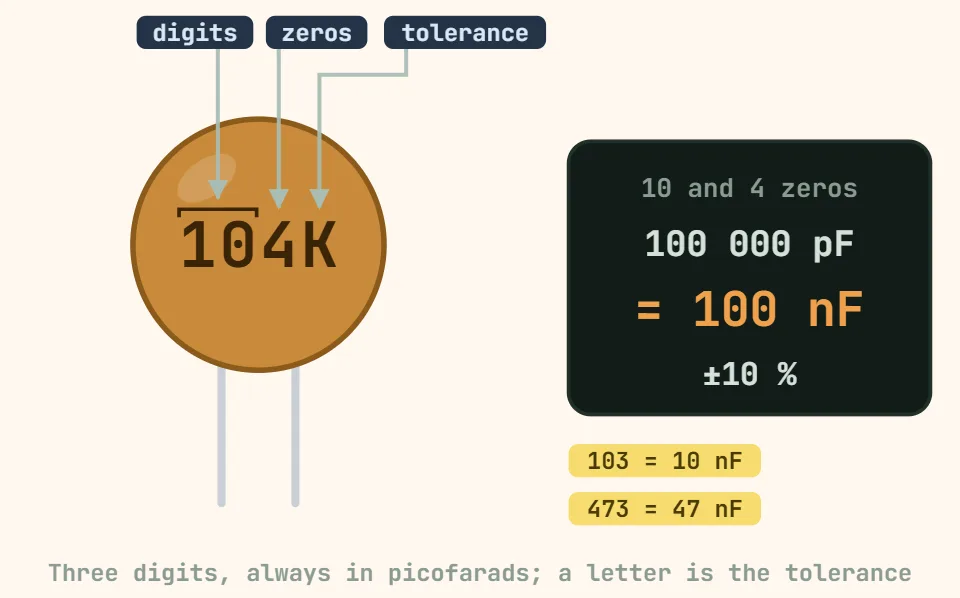 Capacitor codes104 = 100 nF — decode the three-digit marking and its tolerance letter
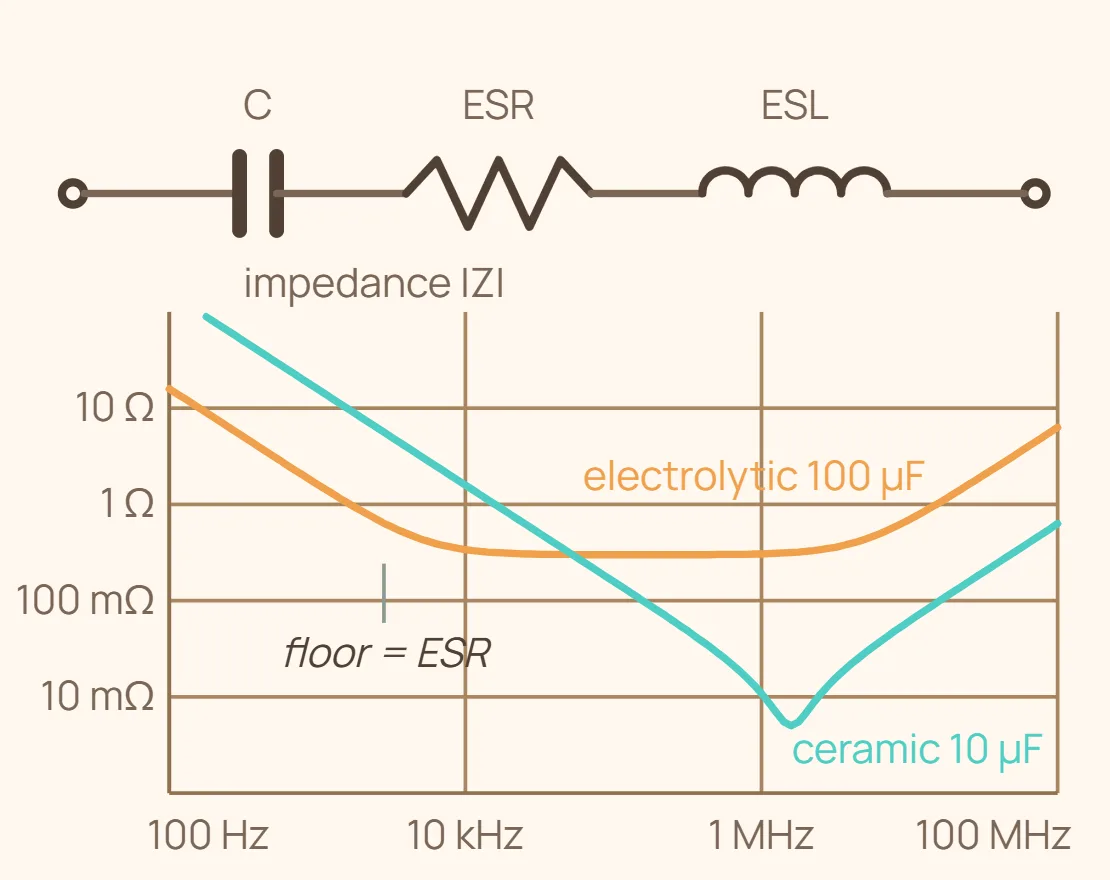 Capacitor ESR & rippleWhat ESR costs you, family by family
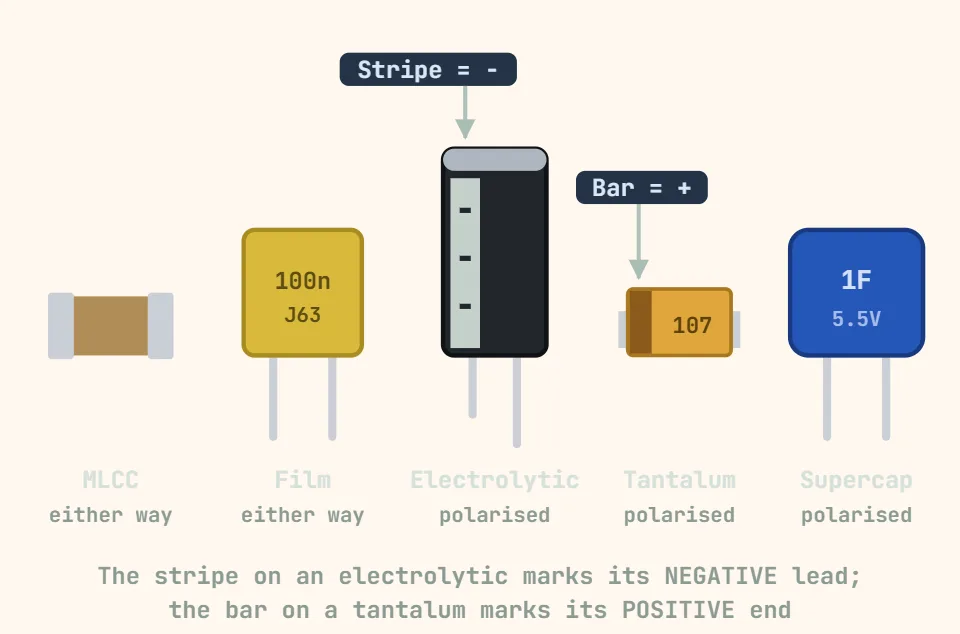 Capacitor typesX7R vs C0G vs electrolytic — which dielectric for which job
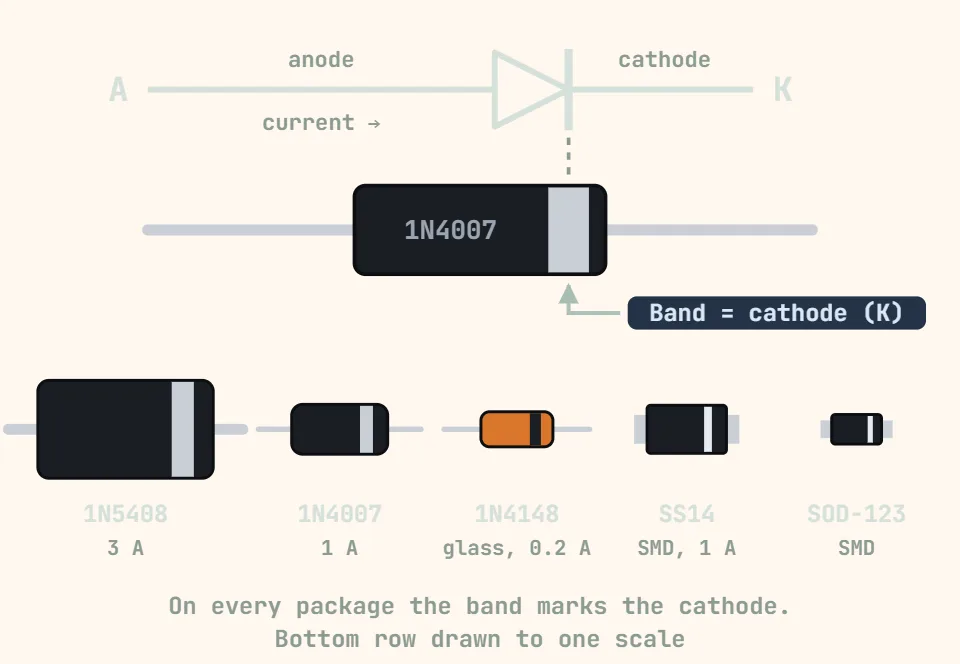 Common diodes1N4001, 1N4148, Schottky and zeners with their real limits
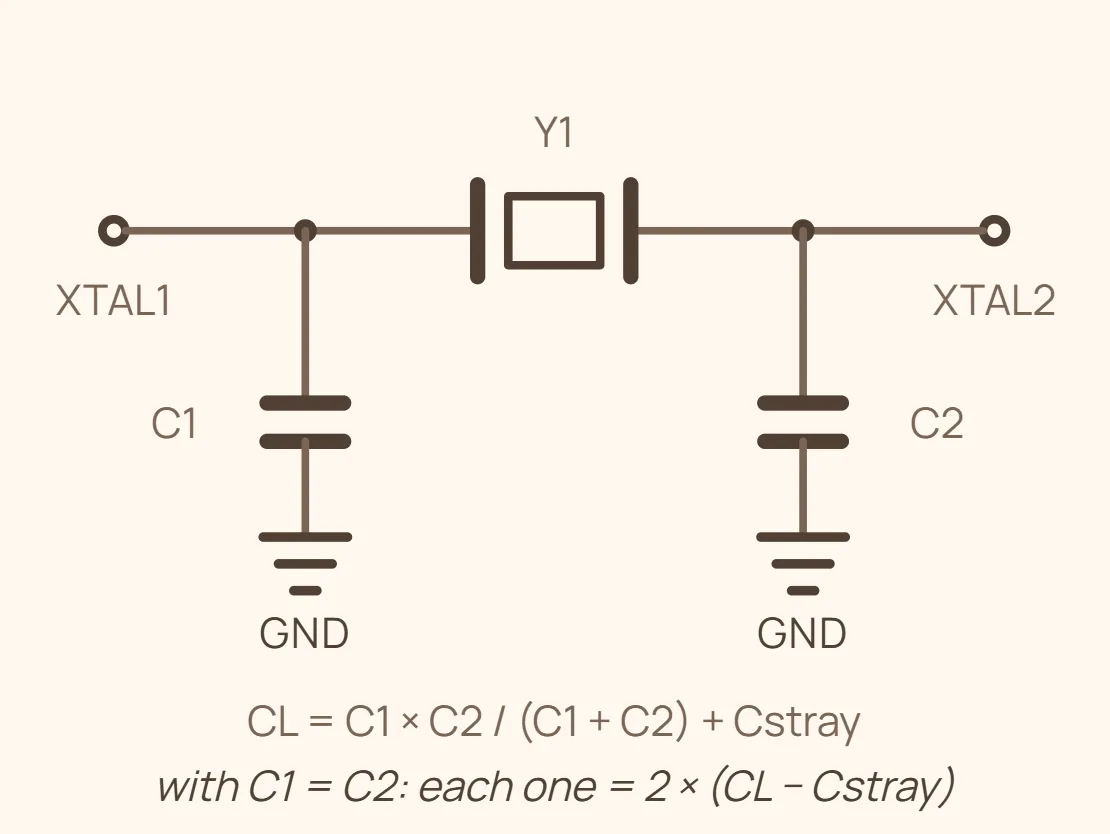 Crystal load capacitorsSize C1 and C2 from the crystal's CL, and why it matters
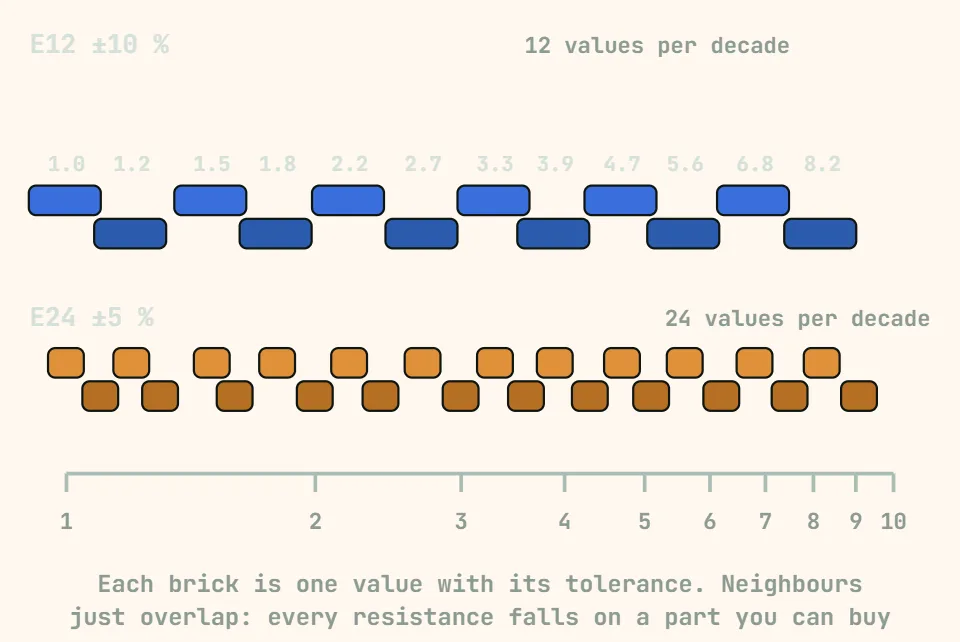 E12/E24 valuesThe resistor values that actually exist, and their tolerances
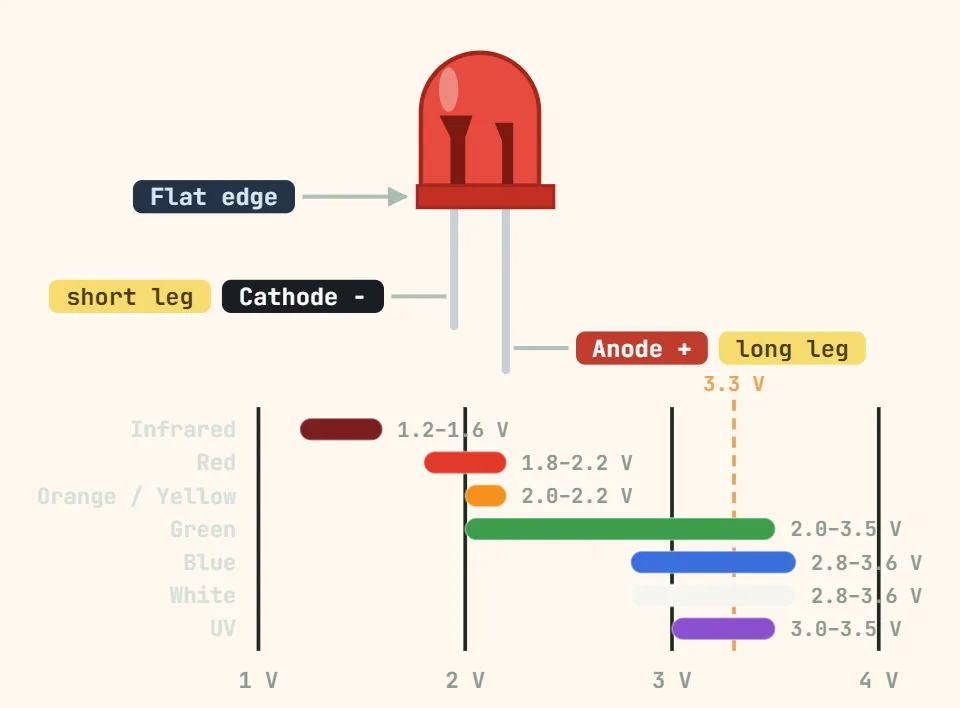 LED forward voltageVf per colour, so the series resistor comes out right
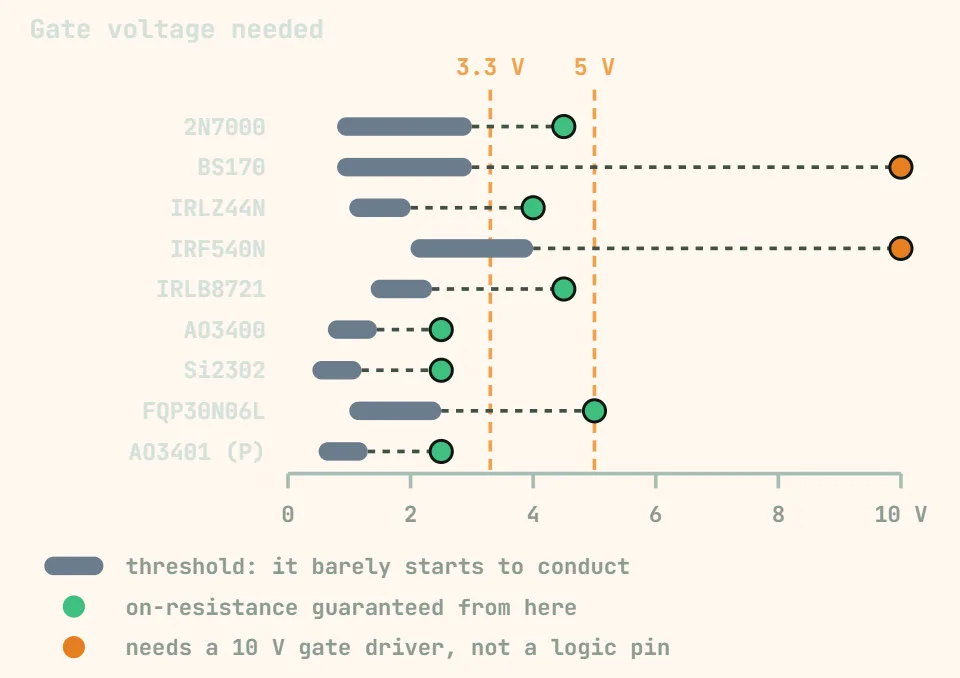 MOSFET comparisonWhich jellybean part actually switches fully at 3.3V or 5V
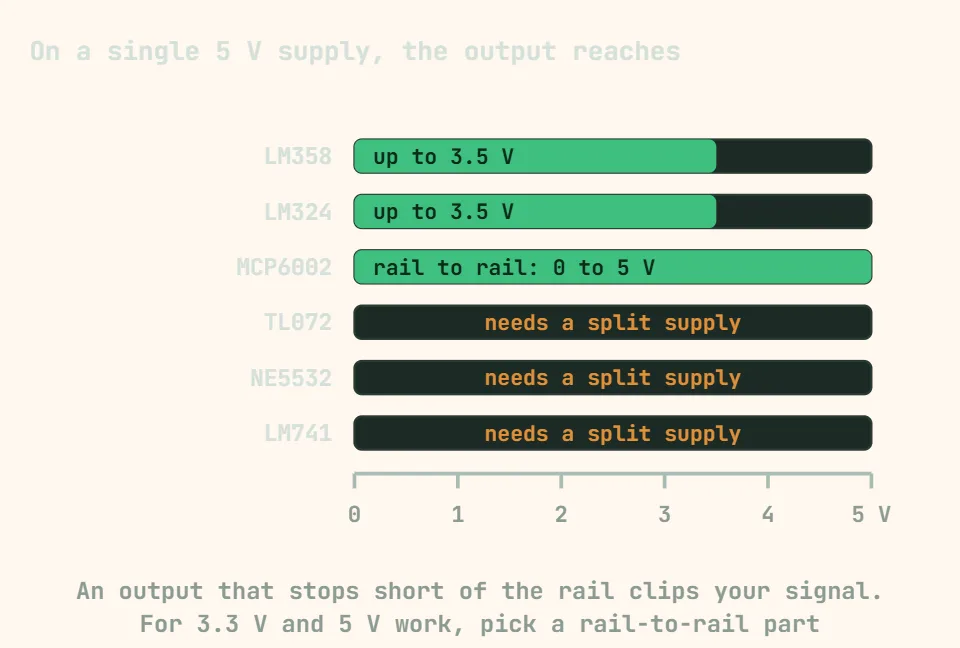 Op-amp comparisonLM358, TL072, MCP6002 and co: supply, offset, speed
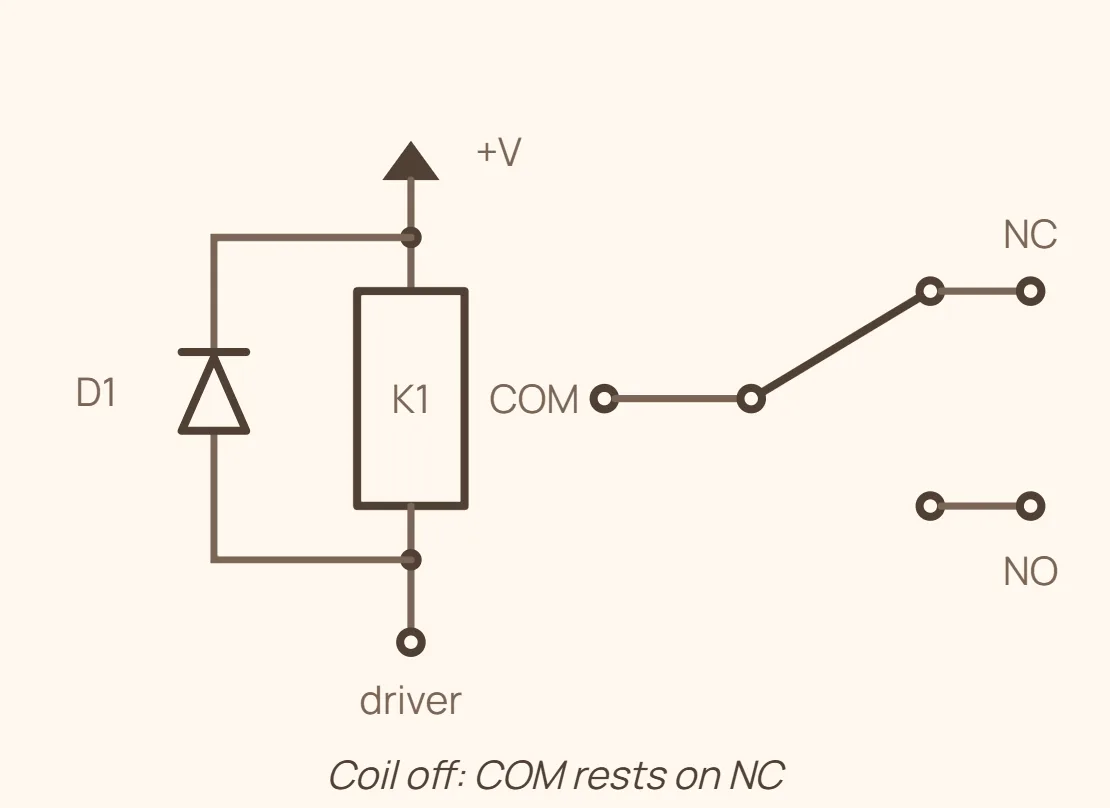 Relay contactsSPDT, NO / NC, coil voltages and the flyback diode
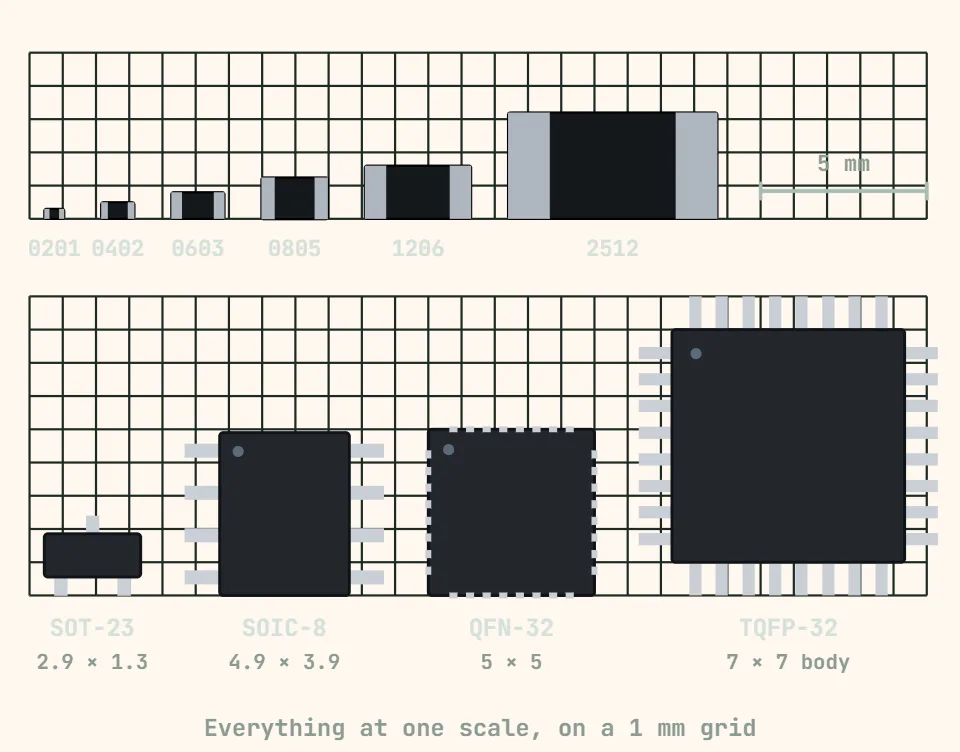 SMD packagesChip sizes drawn to scale, from 0201 to 2512
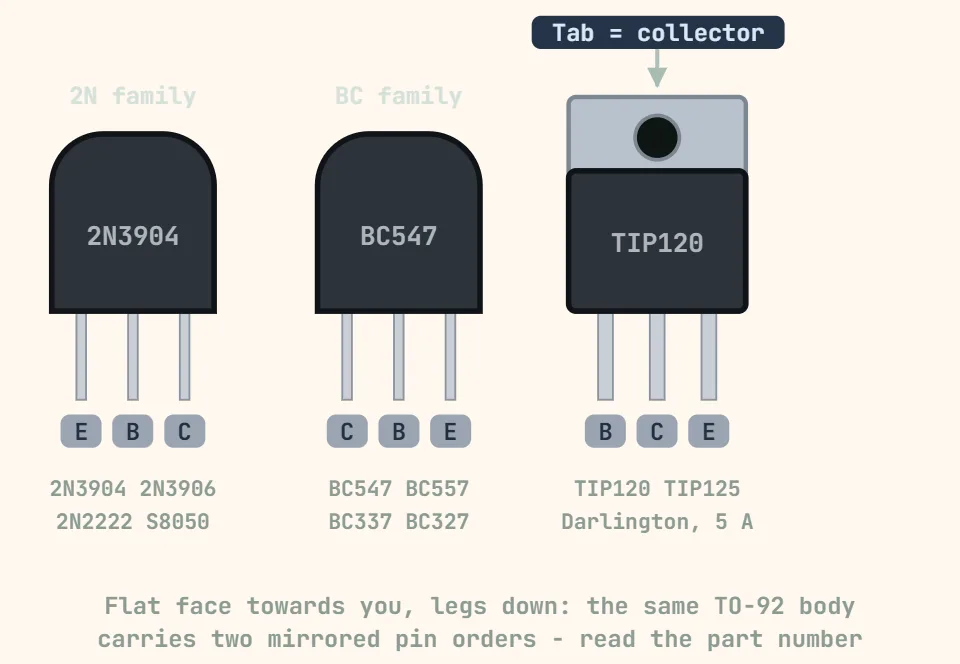 Transistor hFEGain and ratings for the jellybean BJTs, lead order included
Formulas, units & symbols
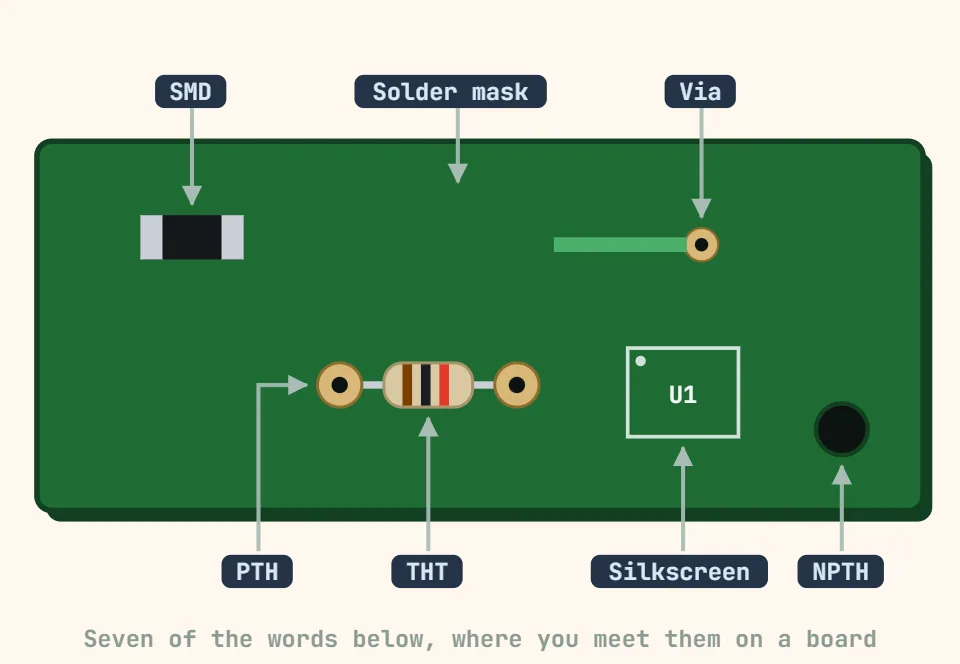 AbbreviationsSMD, BOM, ESR, PTH: the jargon on datasheets and fab files
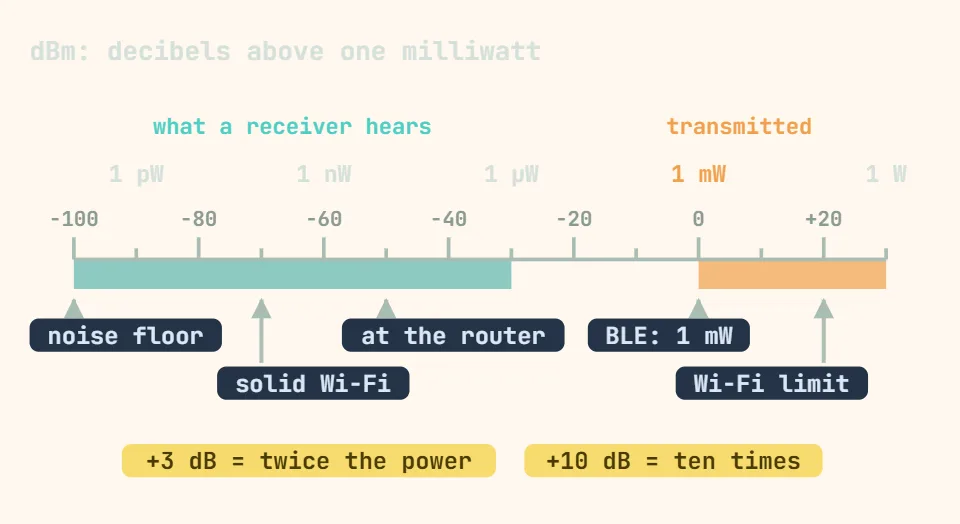 dBm powerDecibel-milliwatt to watts, and what each level means
- Ohm's law wheelTwelve formulas linking V, I, R and P
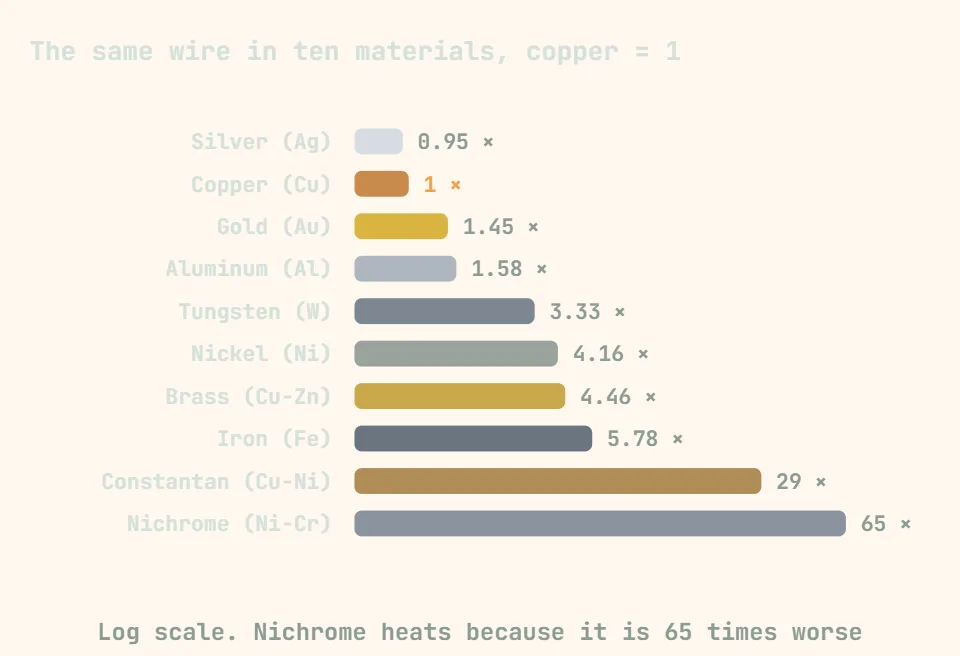 ResistivityHow well common materials conduct
- Schematic symbolsEvery symbol the app draws, with its designator letter
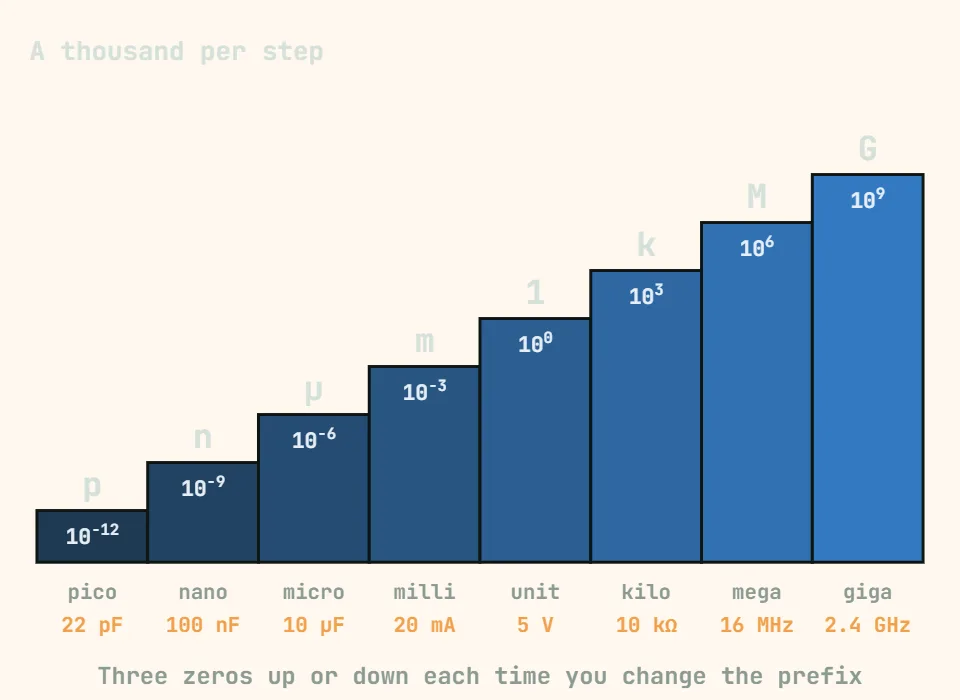 SI prefixesPico to giga, with the factors written out
Wiring & connectors
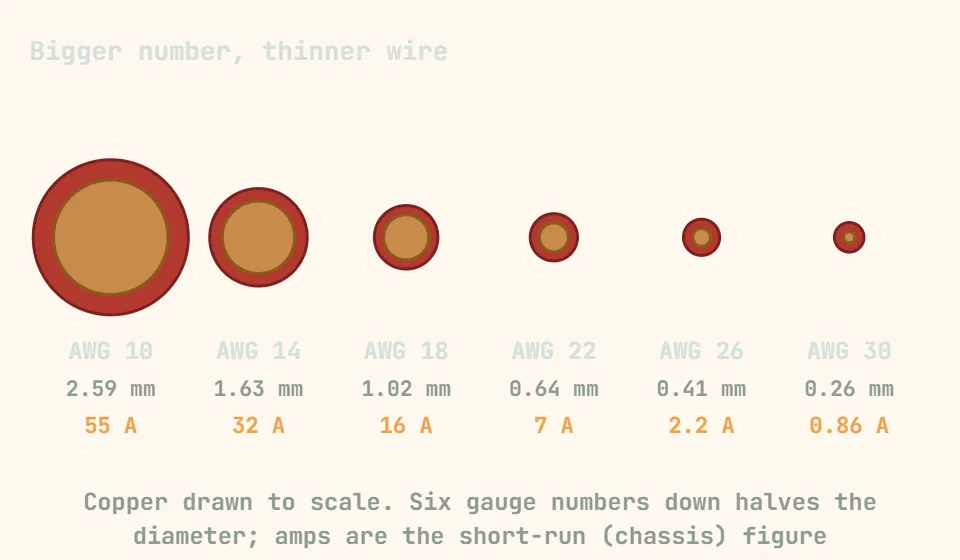 AWG wire gaugeGauge to mm² and the current a wire can really carry
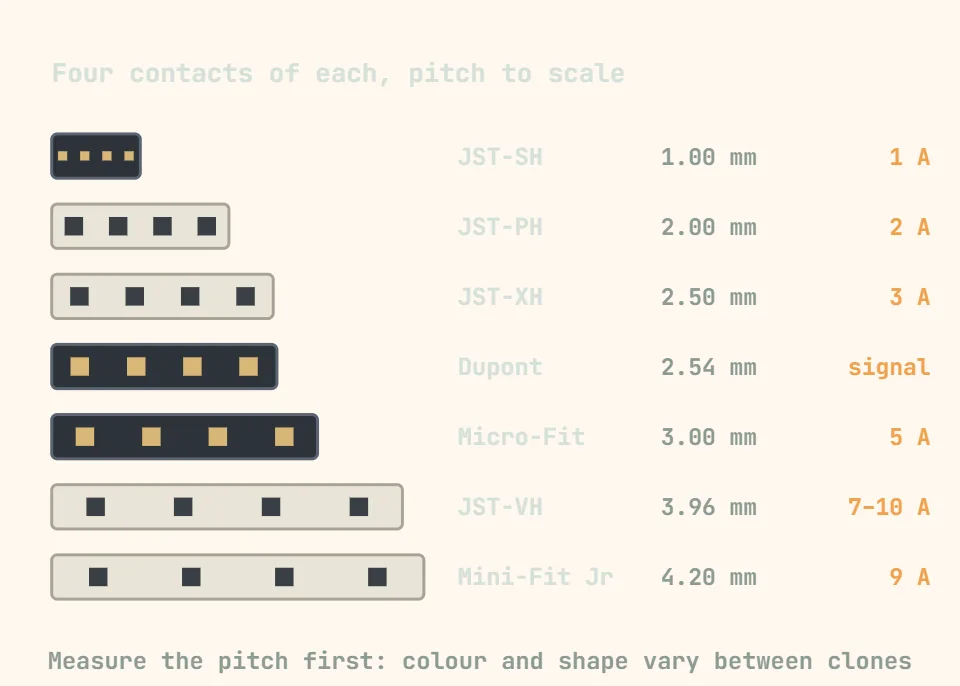 Connector familiesJST XH / PH / SH, Molex, Dupont: pitch, current, where found
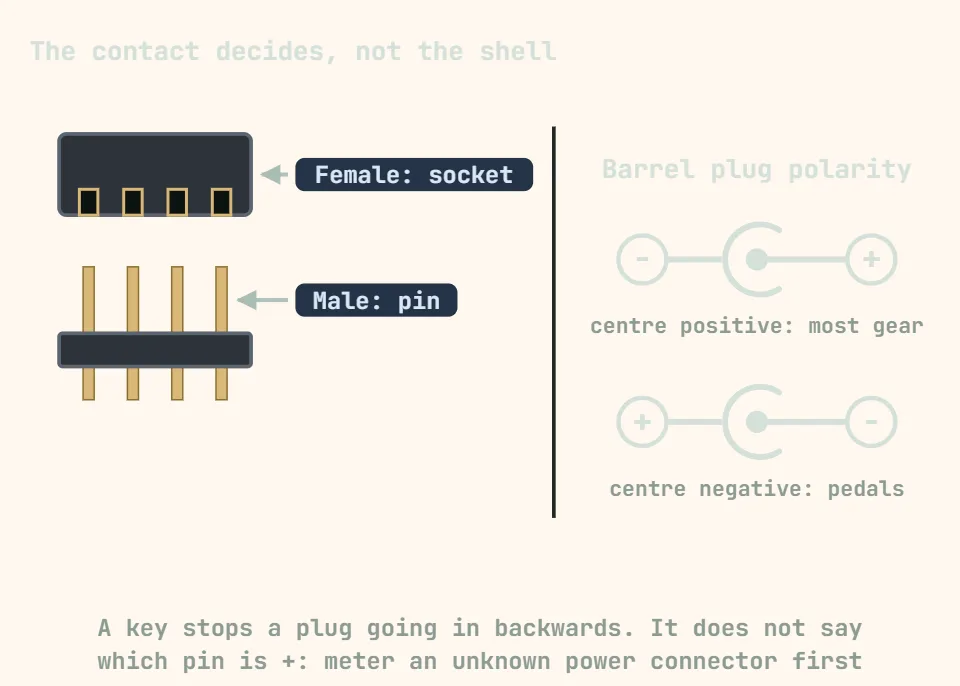 Connector gender & keyingMale or female, and what stops it going in backwards
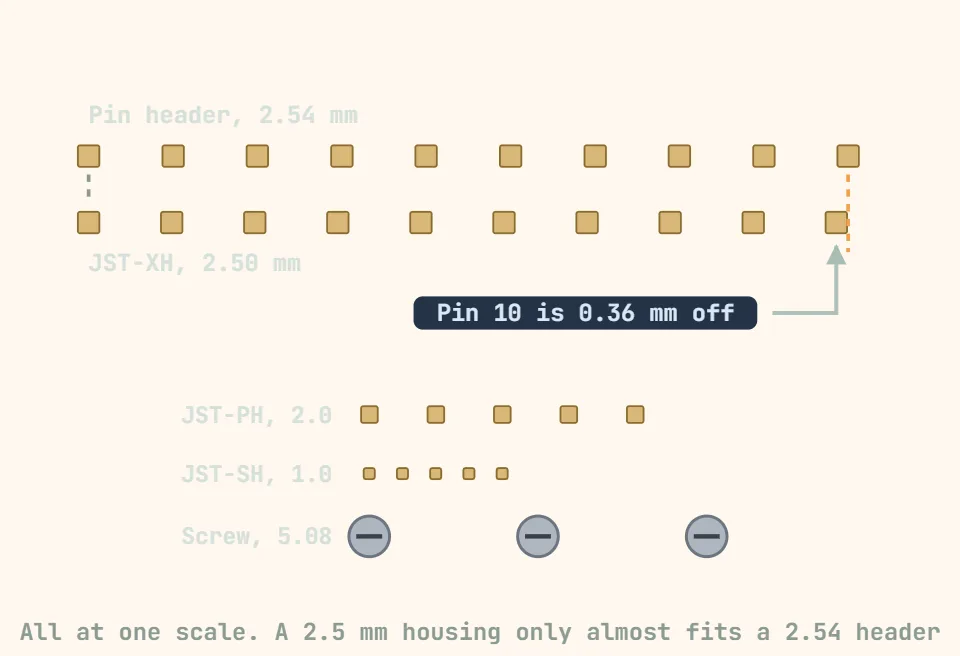 Connector pitchesDrawn to scale — the 2.54 vs 2.5 mm trap in one look
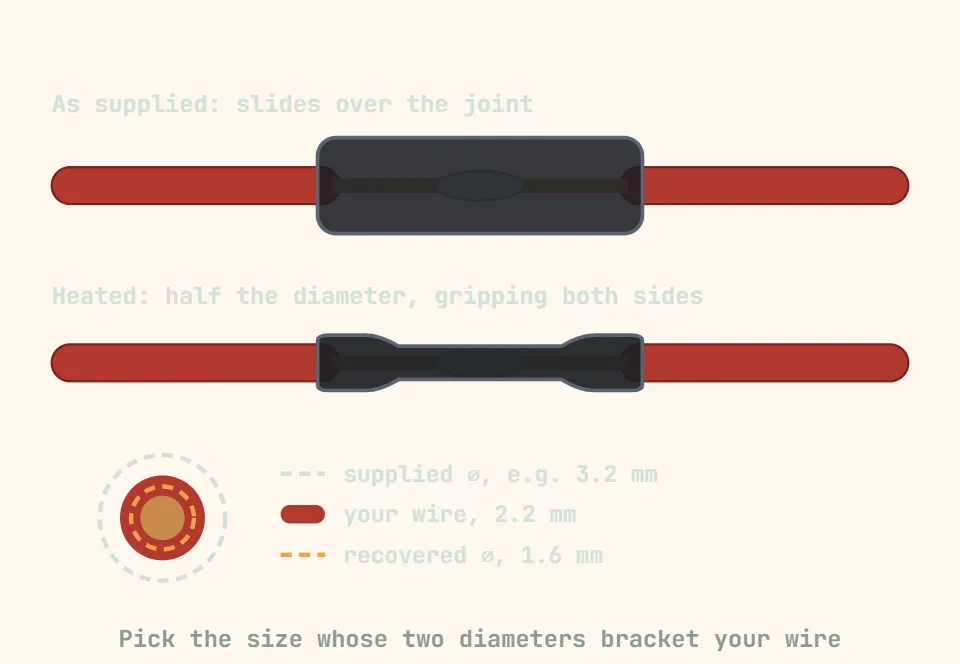 Heat shrink sizesThe tube for each wire gauge, with shrink ratios
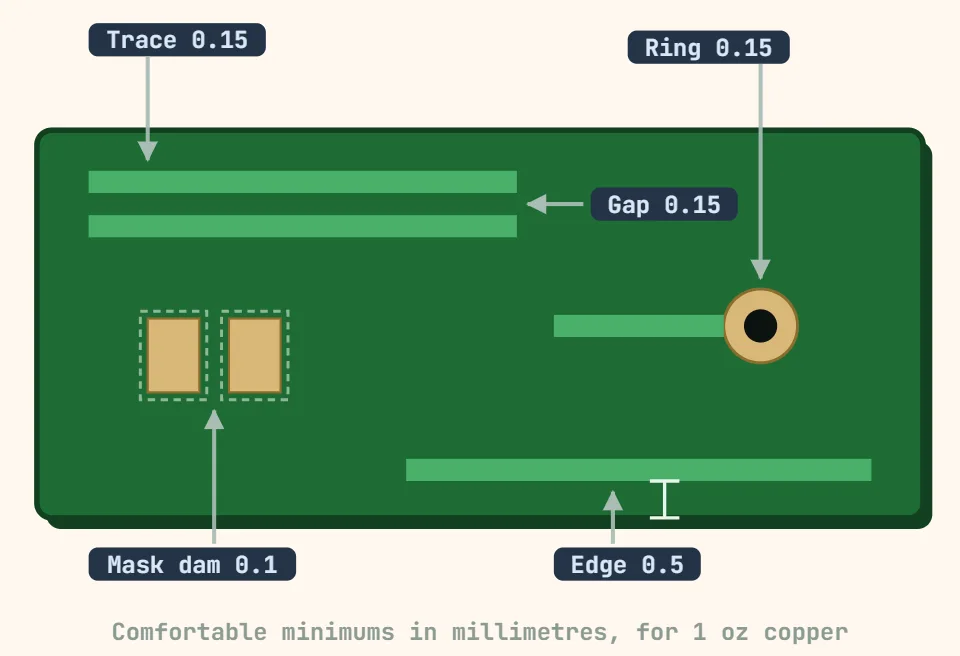 PCB design rulesTrace width and current, spacing, rings, drills, copper weight
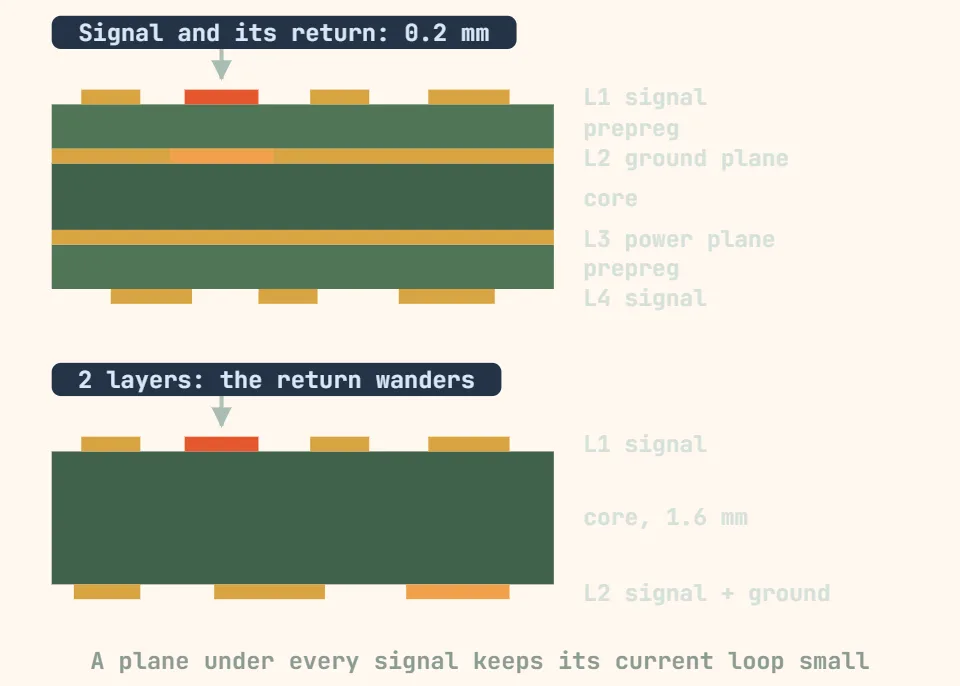 PCB stackup2, 4 or 6 layers, and what a ground plane buys you
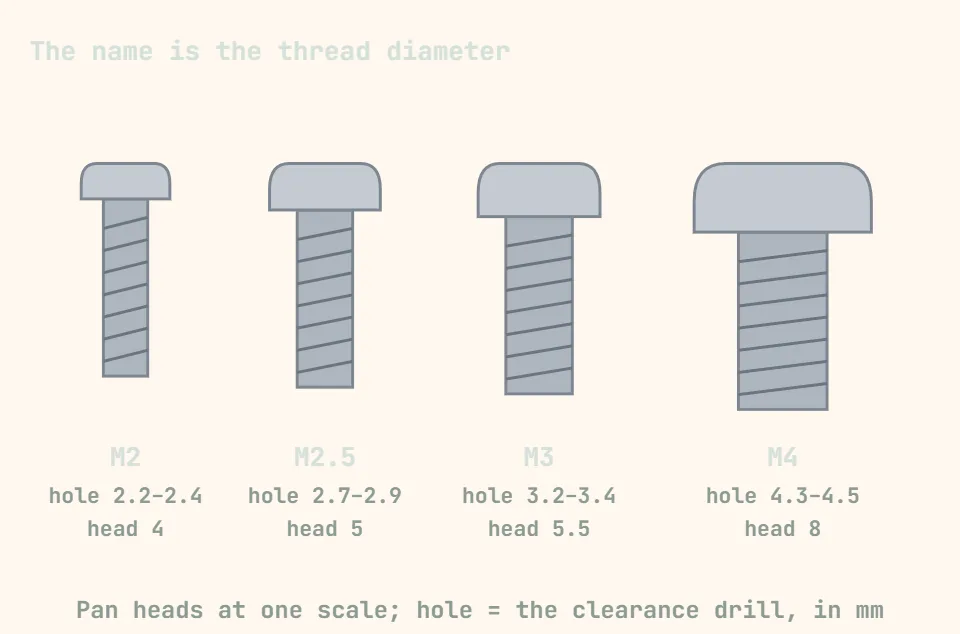 Screws & standoffsM2 / M2.5 / M3 sizes and the mounting holes on common boards
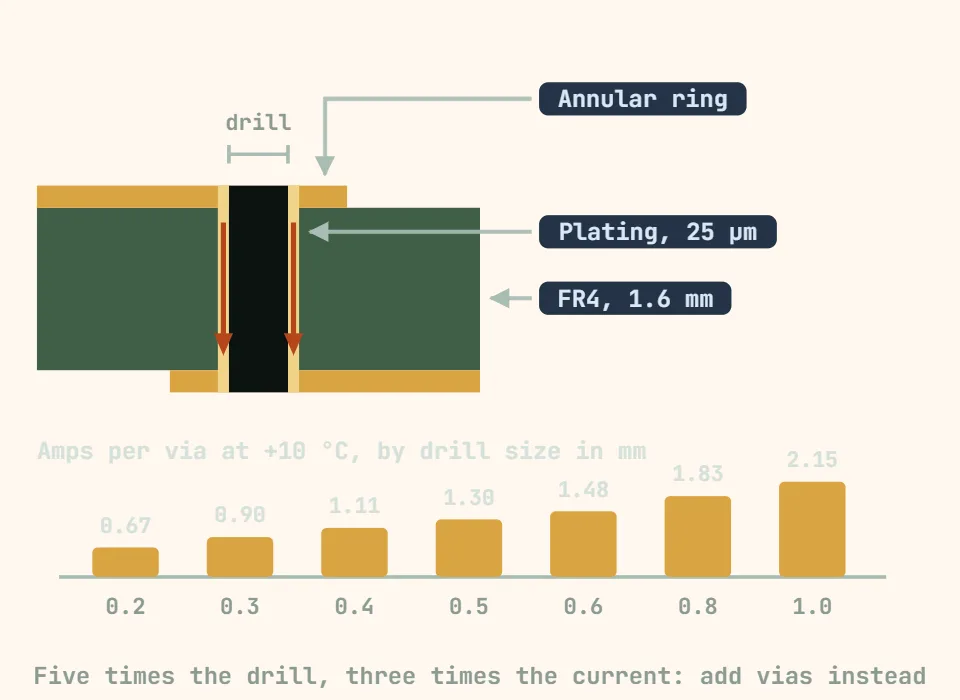 Via currentHow much current a via carries, and when to use several
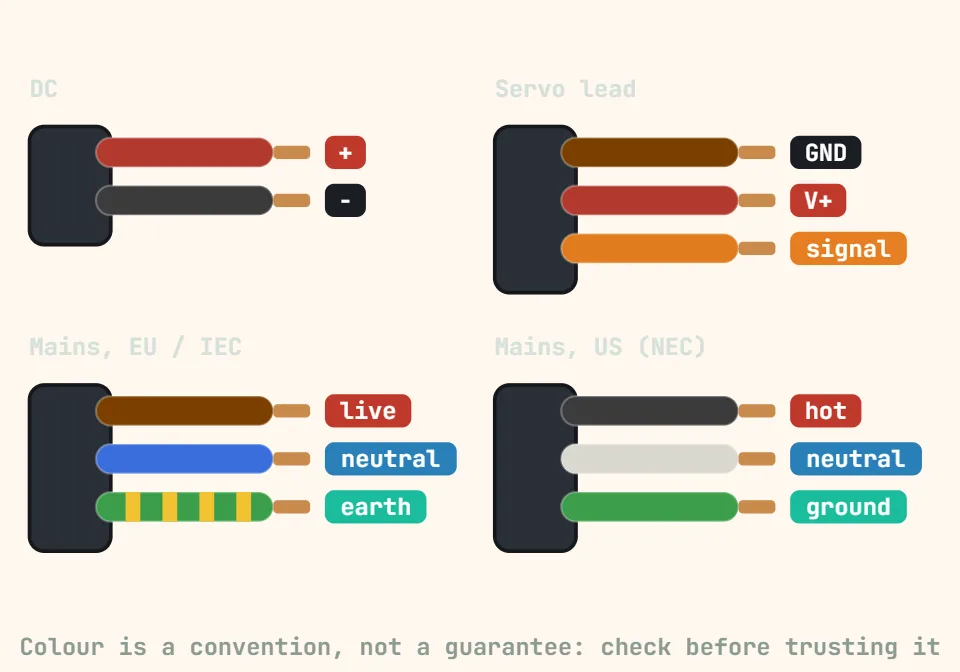 Wiring coloursThe colour conventions for DC, mains and signal wiring
Power & protection
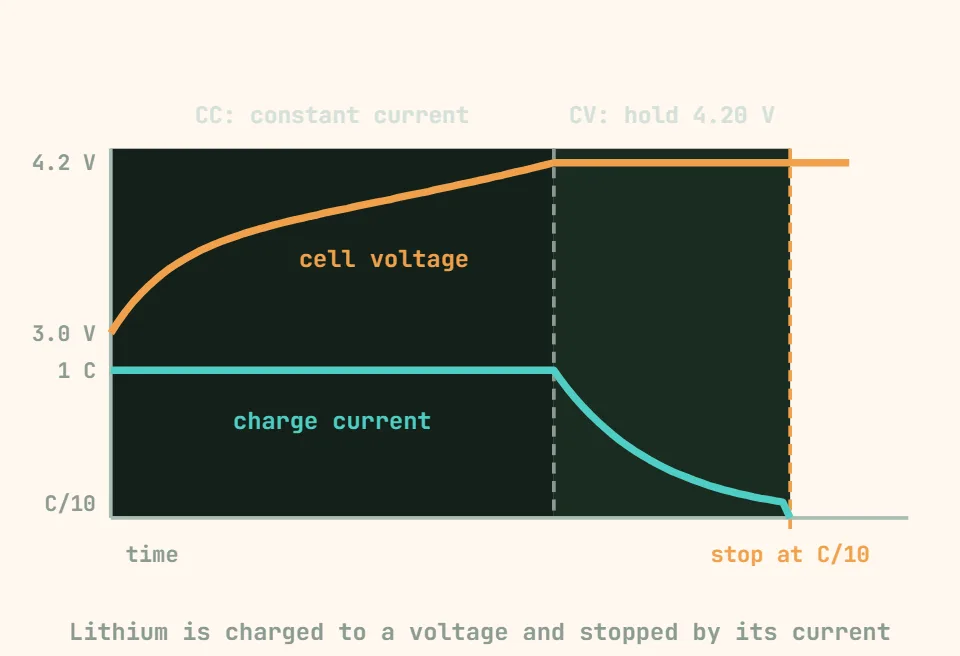 Battery chargingCC-CV per chemistry, and the mistake that starts fires
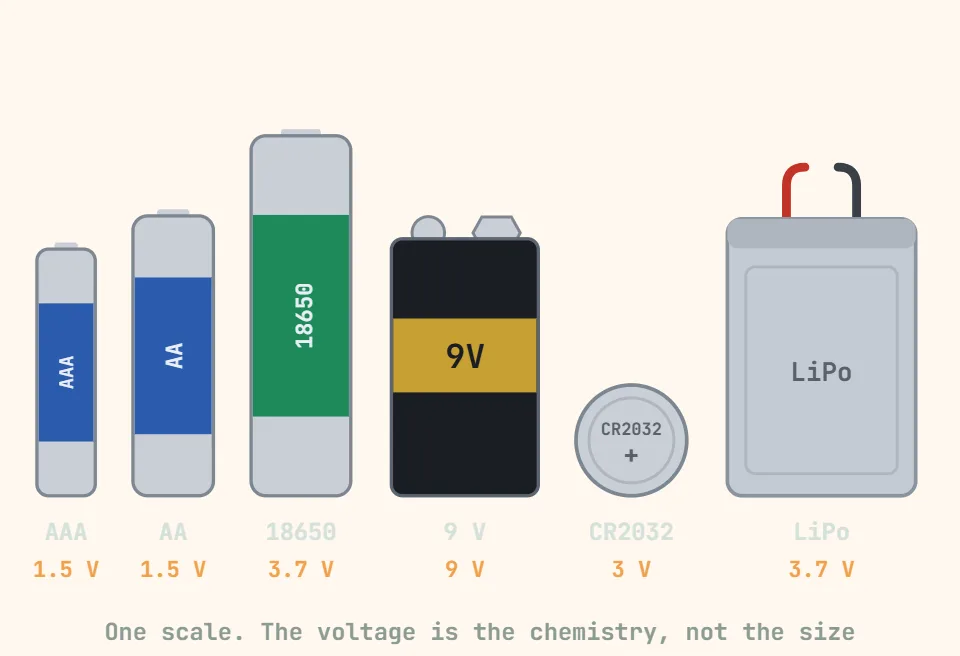 Battery typesChemistries, cell voltages and what each one is good at
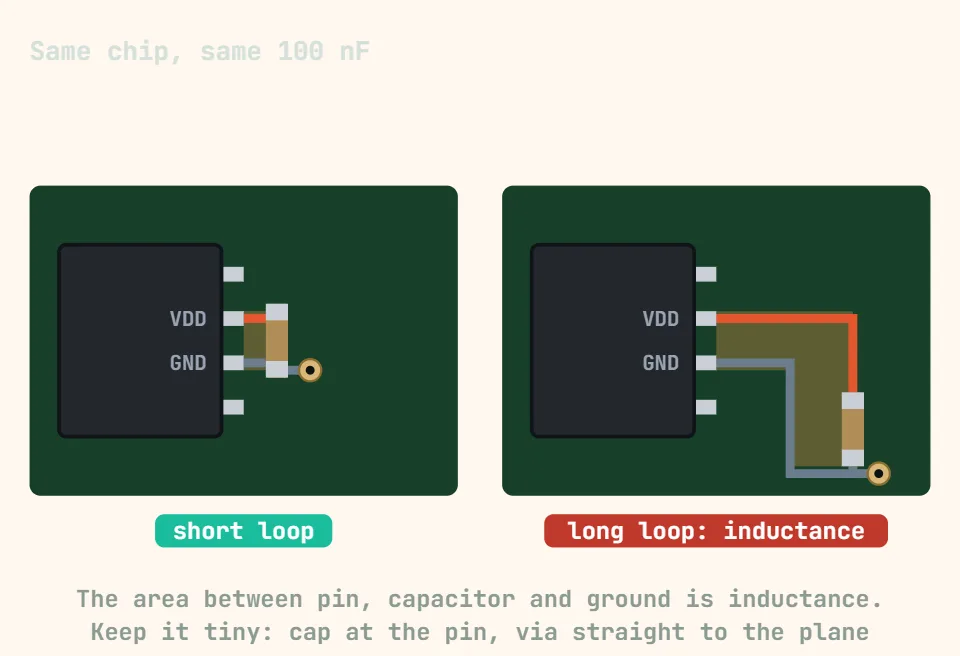 Decoupling capacitorsWhy every IC needs one, which values, and where to put them
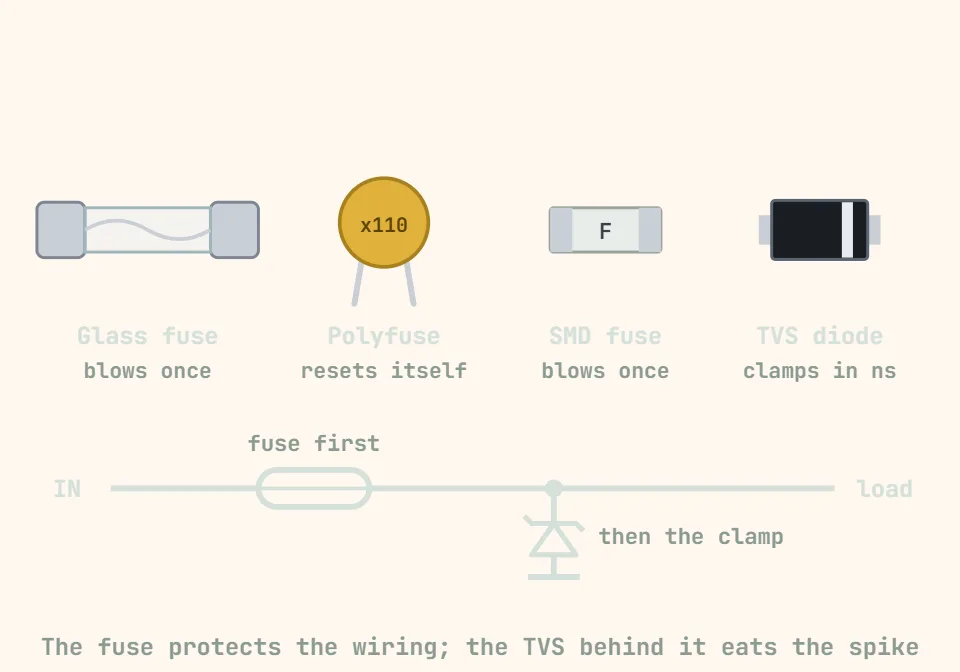 Fuses & protectionFast vs slow blow, polyfuses, TVS and reverse-polarity guards
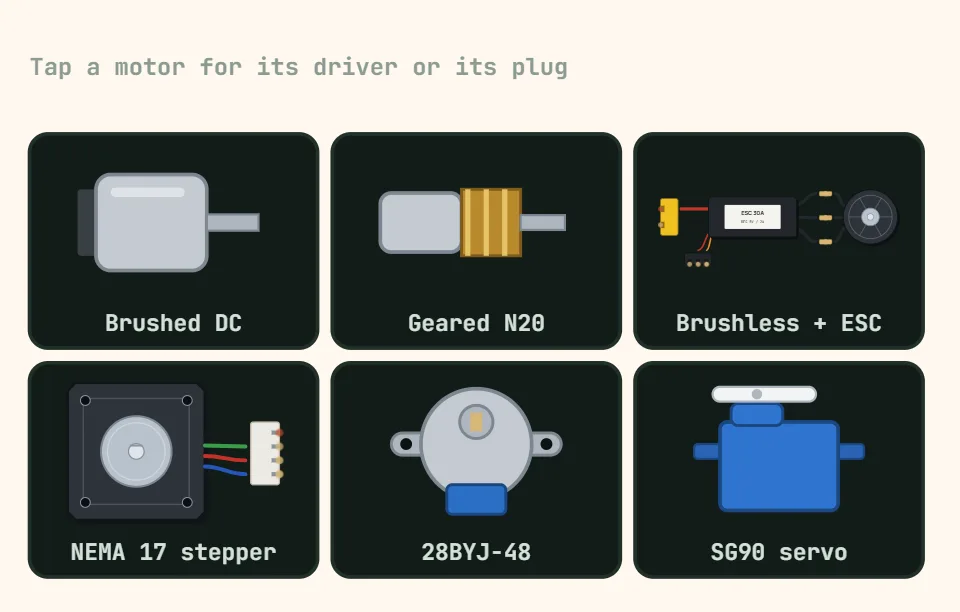 Motor typesDC, stepper, servo, brushless: control and drivers
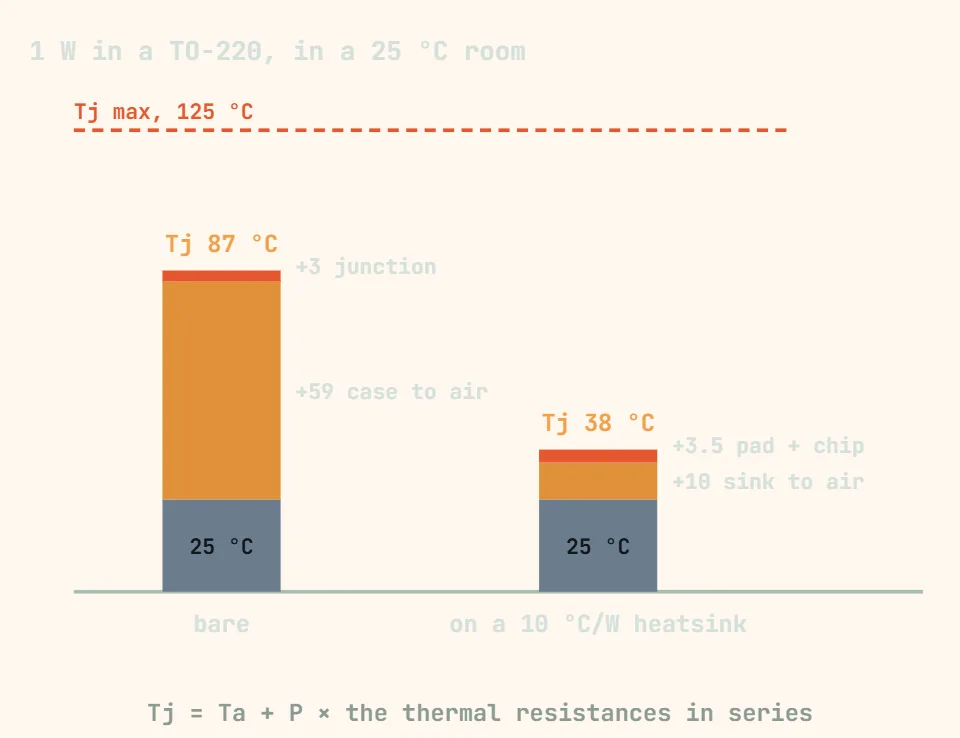 Thermal managementTj, θJA, and when a part needs copper or a heatsink
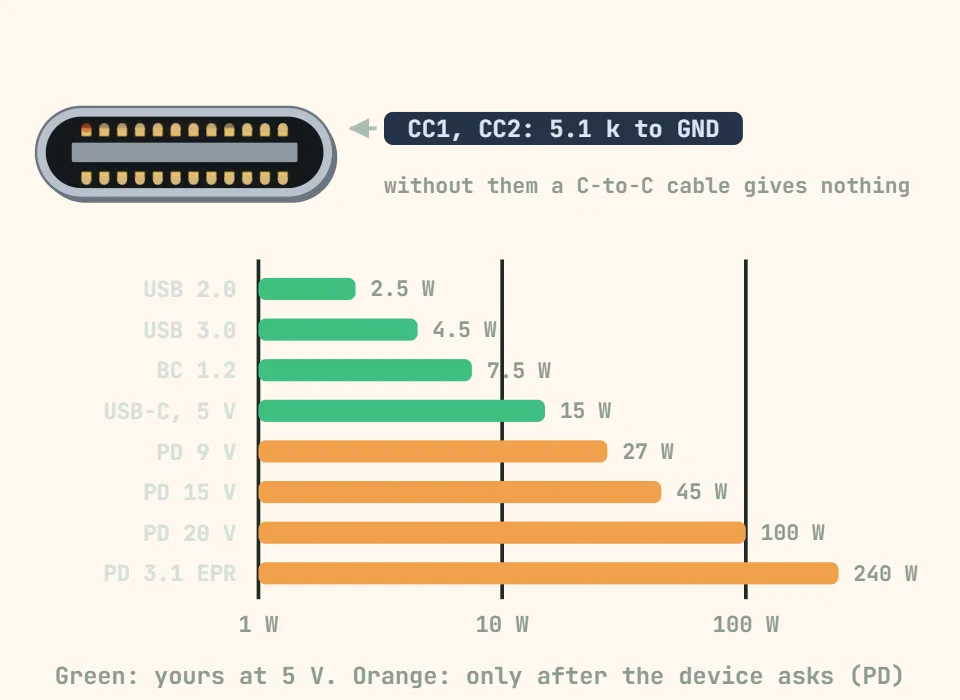 USB powerWhat each port really delivers, and why USB-C needs its resistors
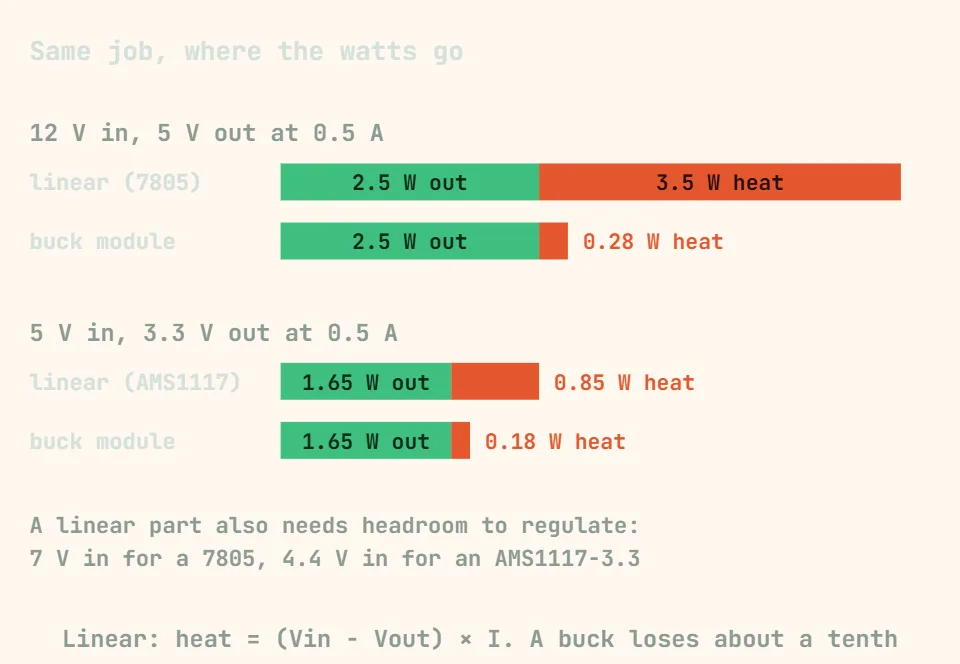 Voltage regulators7805, LM317, LDOs and buck modules side by side
Digital, boards & sensors
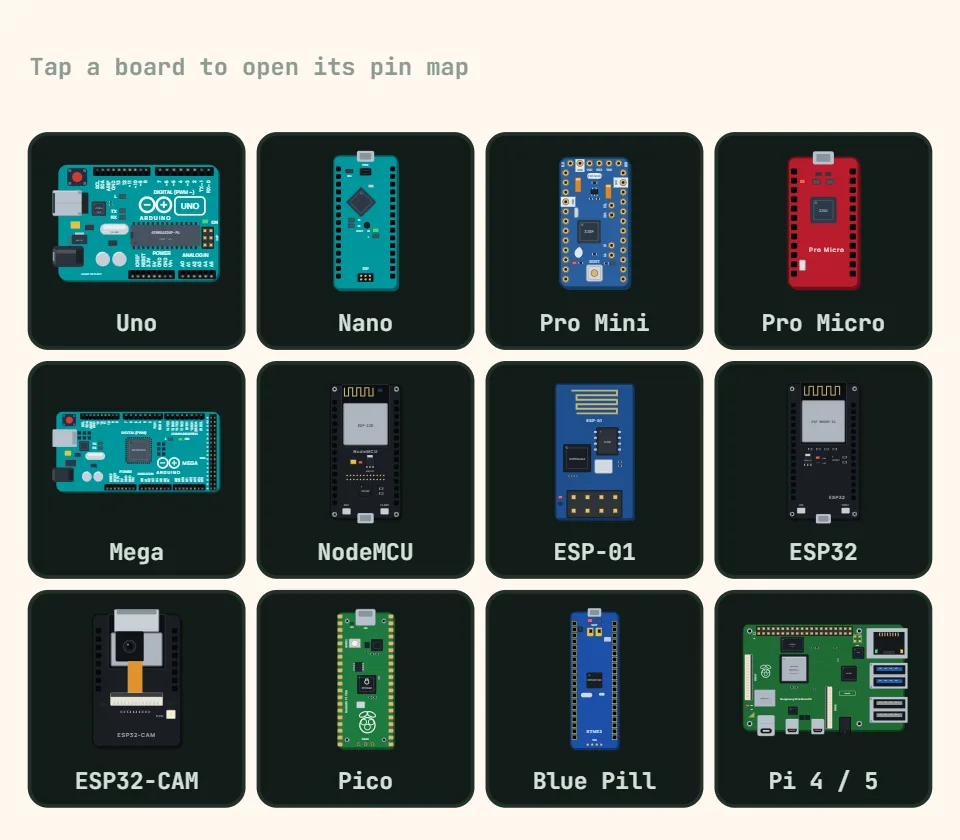 Dev-board comparisonEvery board in the Pinouts tab, spec for spec
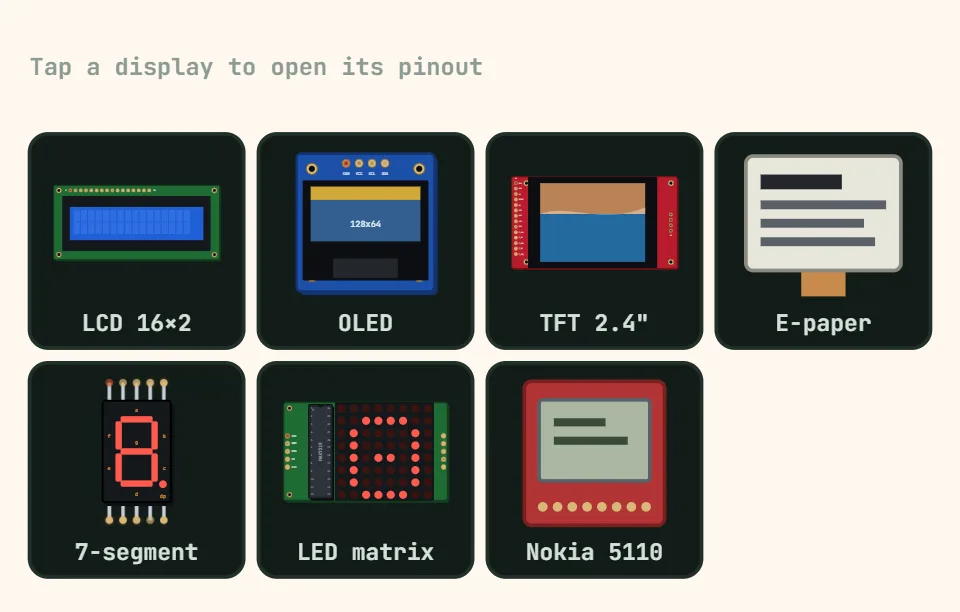 Display typesLCD, OLED, TFT, e-paper: speed, power, sunlight
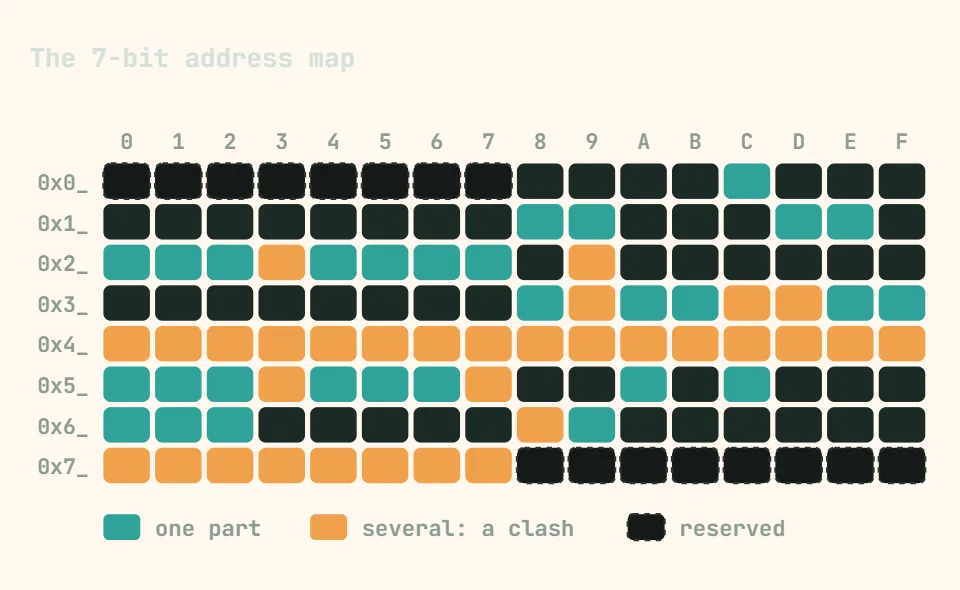 I2C addressesWhat that hex address from a bus scan actually is
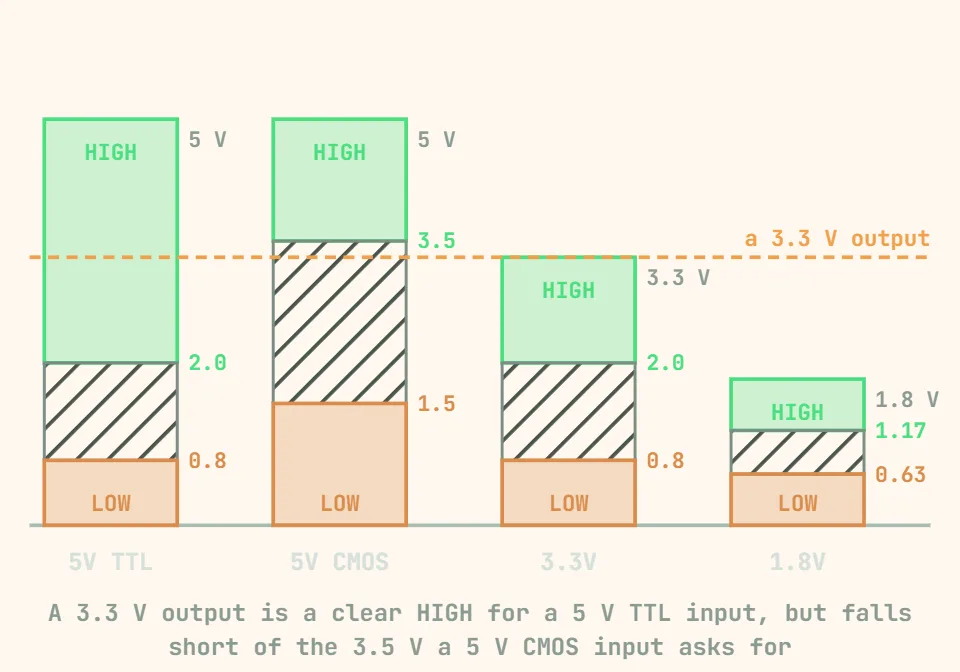 Logic levelsVIH / VIL per family — what damages what
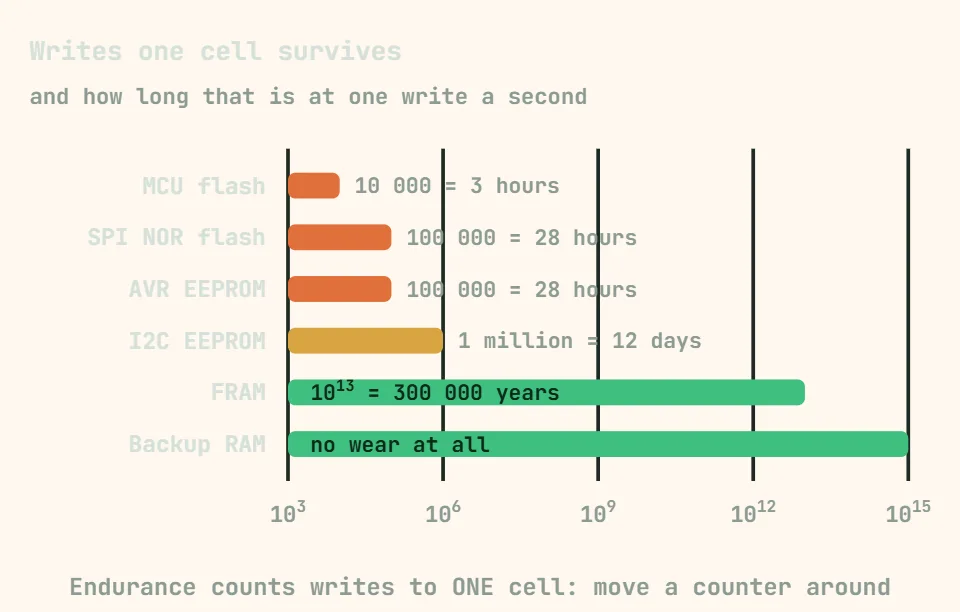 Memory & storageEEPROM, flash, FRAM, SD: endurance, speed, retention
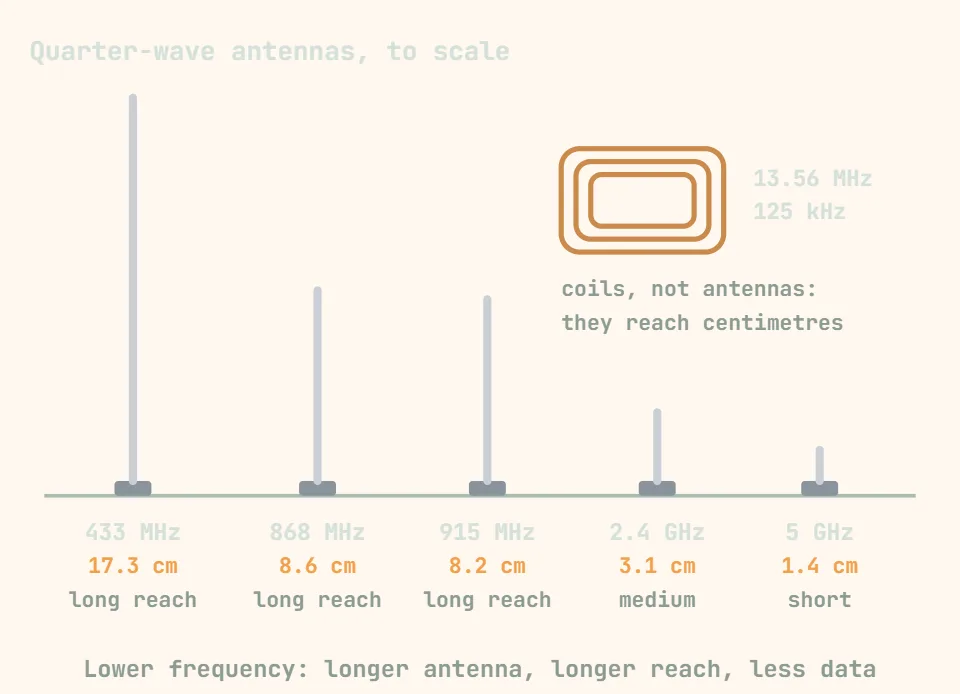 Radio bandsISM bands, power limits and what lives on each
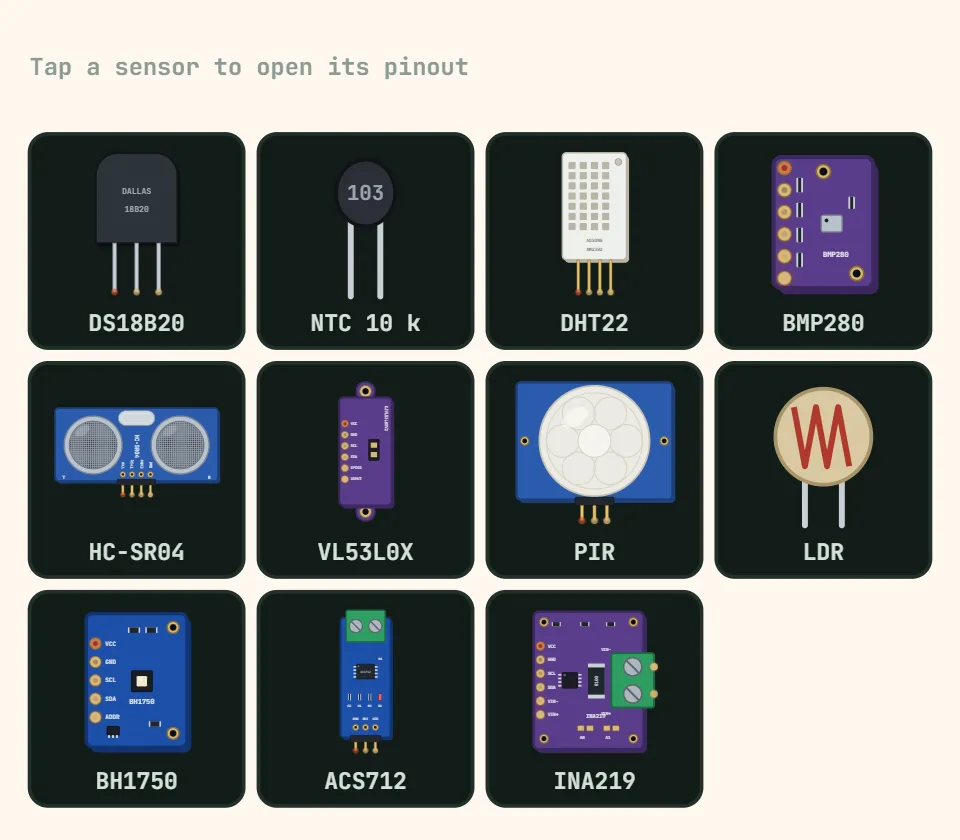 Sensor pickerWhich sensor for temperature, distance, light or current
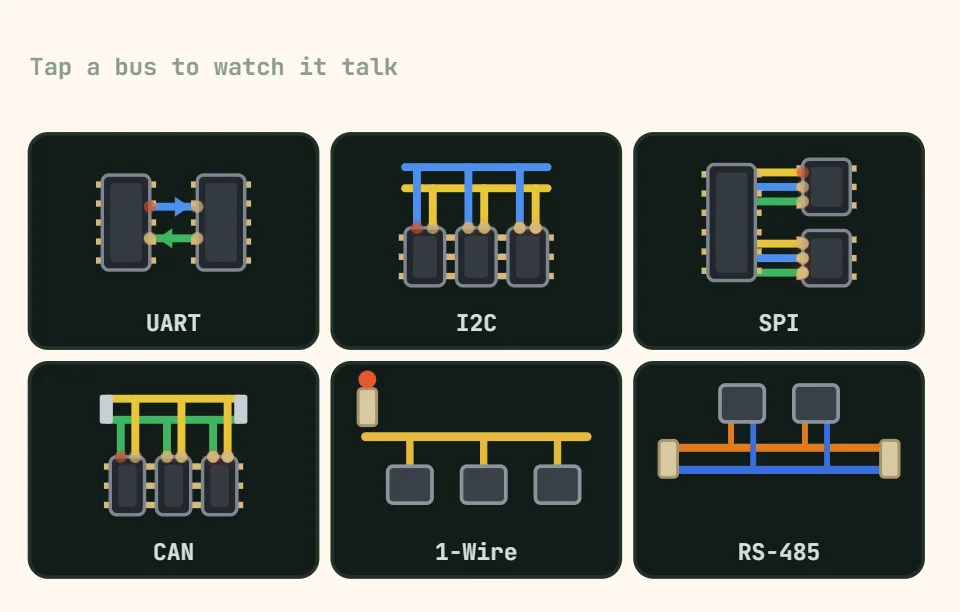 Serial protocolsUART, I2C, SPI, CAN and friends: wires, speed, reach
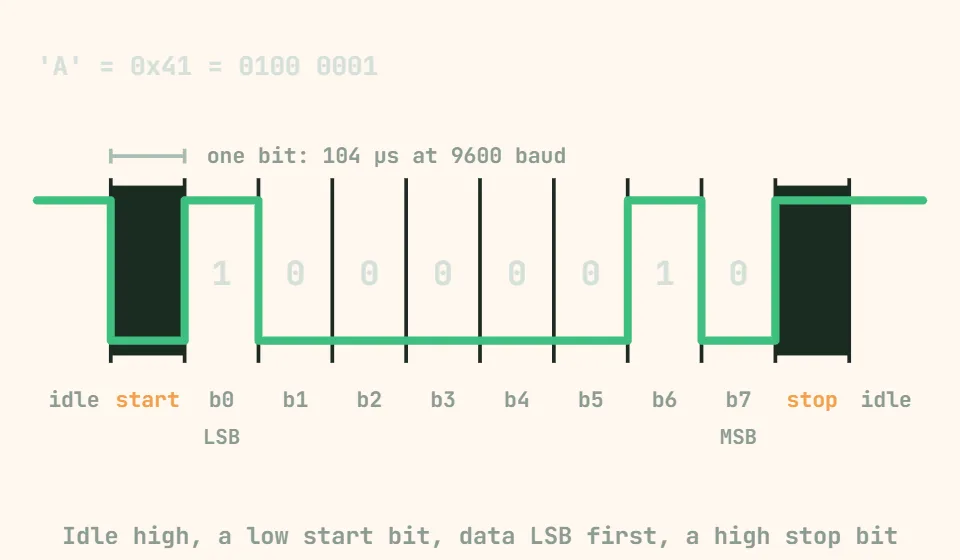 UART baud & framingBit times per baud rate, and what 8N1 really sends
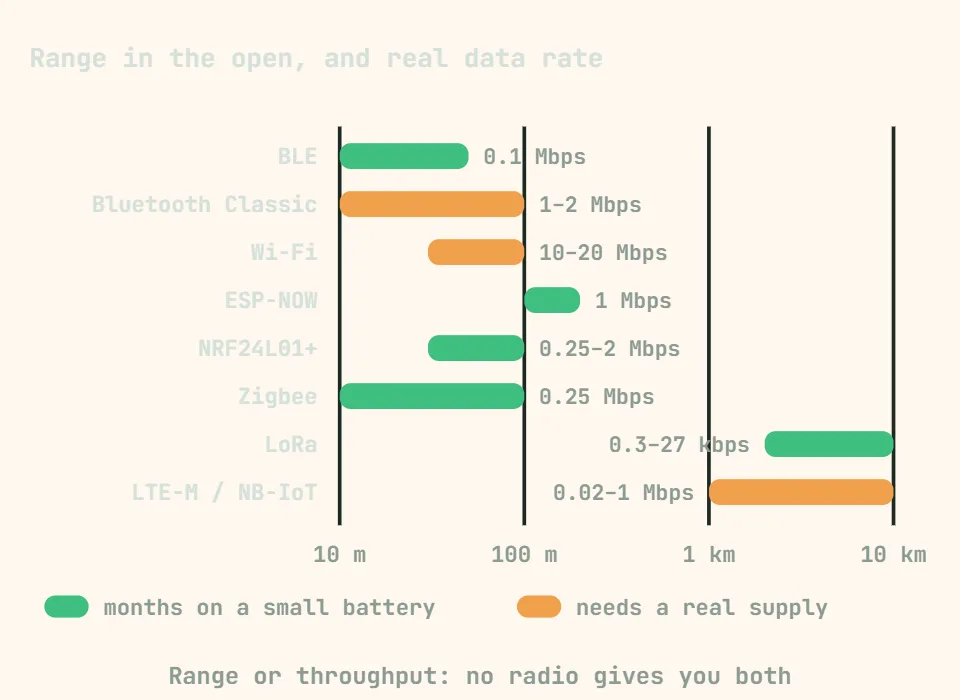 Wireless comparisonBLE, WiFi, LoRa, Zigbee: range, rate, power and licence
Workshop & measuring
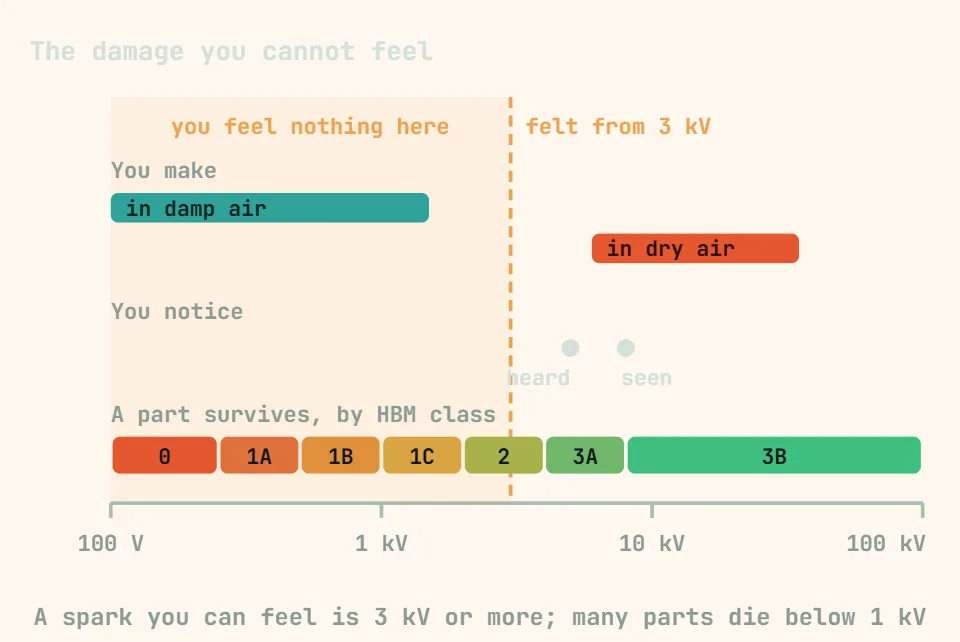 ESD & handlingWhat really kills parts, and what the bags actually do
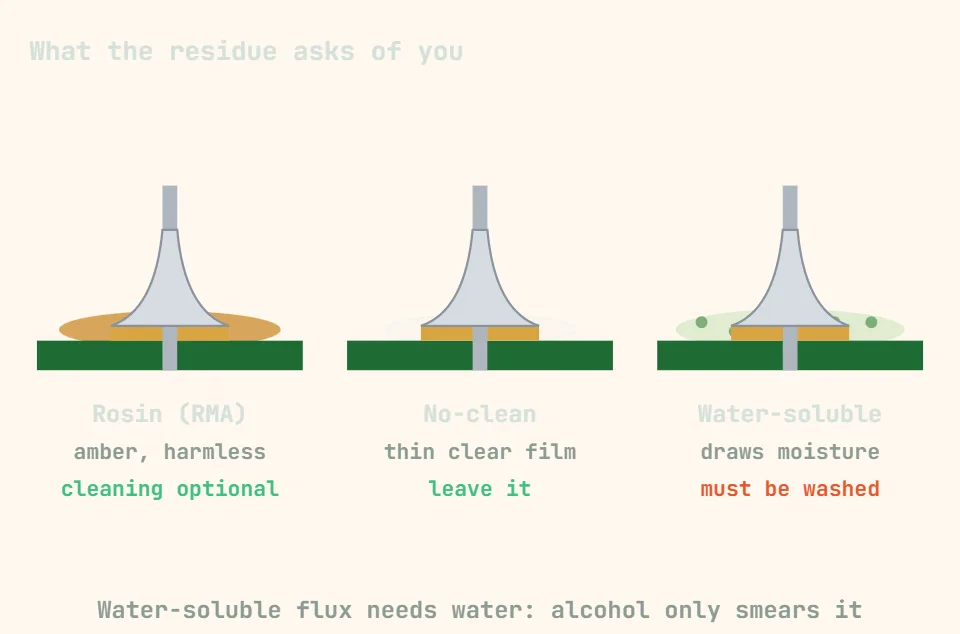 Flux typesRosin, no-clean, water-soluble, and which must be washed off
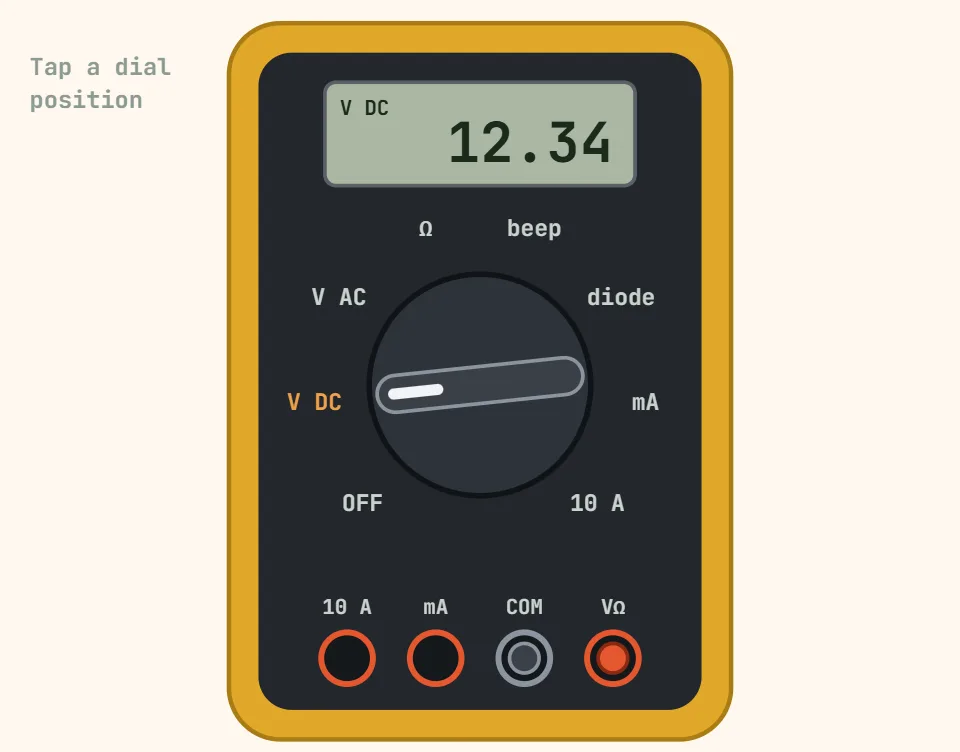 Multimeter guideEvery dial position, burden voltage, and that fuse
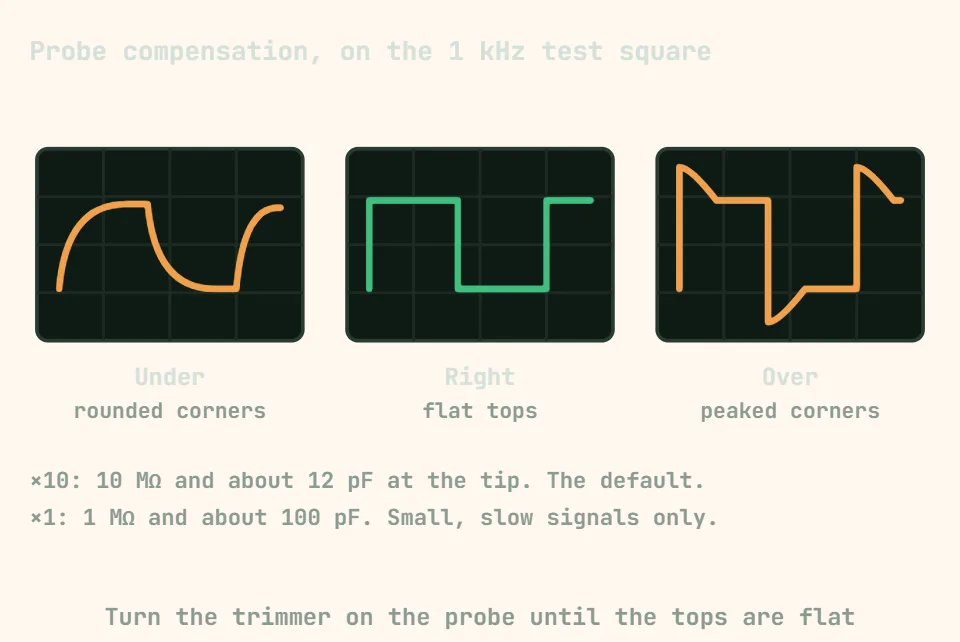 Oscilloscope basics1x vs 10x, compensation, triggering, aliasing
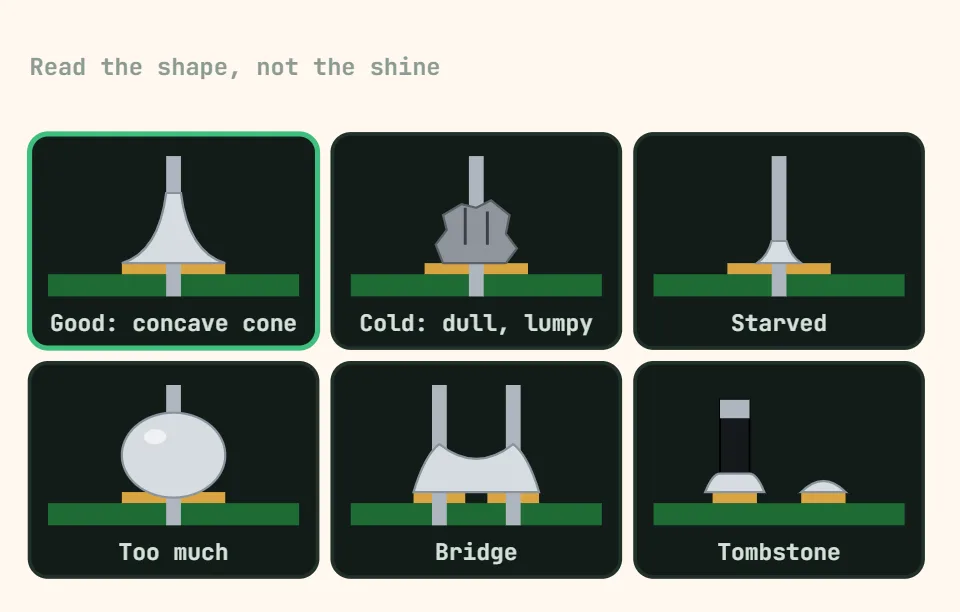 Solder joint qualityRead a joint by its shape: cold, dry, bridged, tombstoned
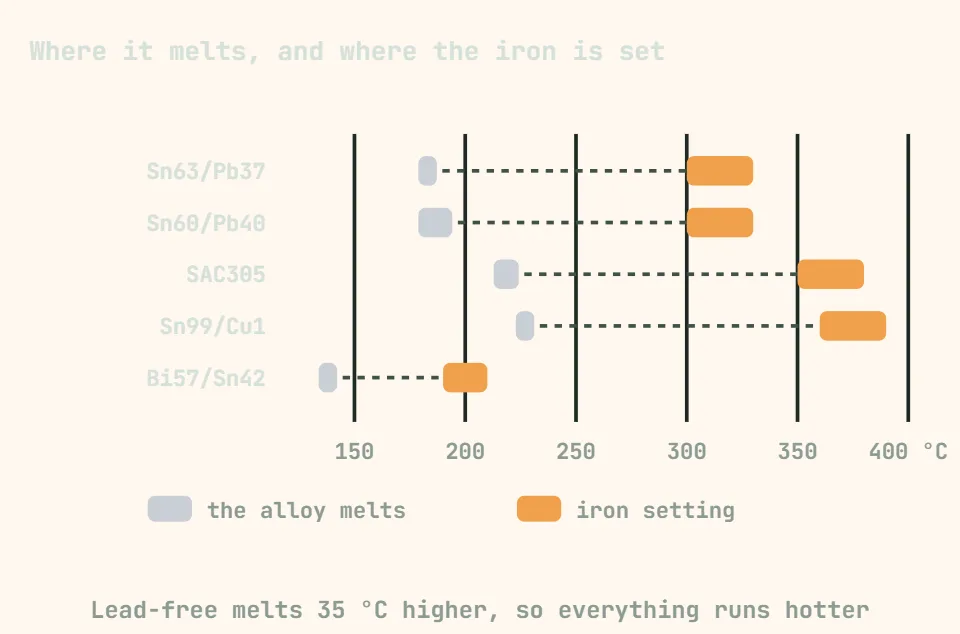 Soldering & reworkAlloys, iron temperatures, tip choice and flux