Reference sheet
Heat shrink sizes
The tube for each wire gauge, with shrink ratios
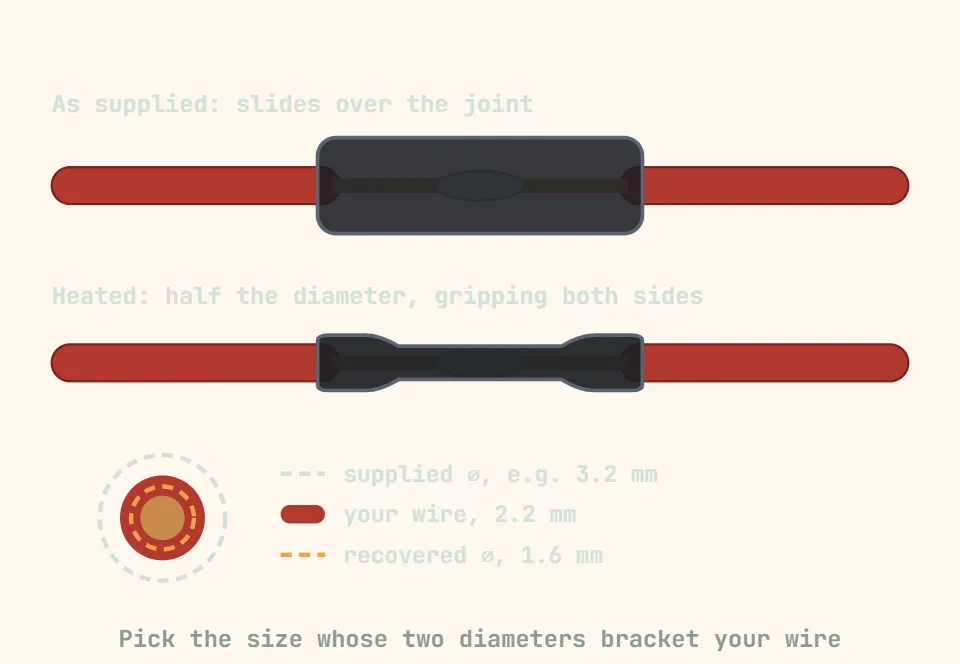
Heat shrink tubing size chart
Heat shrink tubing is most commonly a polyolefin sleeve that contracts around a wire splice, connector body, or cable bundle when heated, giving mechanical strain relief and electrical insulation. PVC is a lower-cost, lower-temperature-rated alternative, while fluoropolymer (or materials like silicone and Viton) is used for high-temperature work. In PCB and harness rework, heat shrink is the standard way to cover a solder joint, a jumper-wire repair, or the transition where a connector's crimped leads meet its cable.
Sizing is based on the tubing's nominal, as-supplied (expanded) inside diameter and its shrink ratio - the ratio between that expanded diameter and the fully recovered diameter once heat is applied. A 2:1 ratio, the general-purpose default, shrinks to about half its starting diameter; a 3:1 or higher thin-wall ratio shrinks much further, letting one size conform tightly over irregular shapes such as connector housings, cable-to-connector junctions, or bundles of mixed-diameter wires. As a rule of thumb, pick an expanded diameter roughly 20-30% larger than what you're covering so it slides on freely, then check that the recovered diameter is at or below that item's size so the fit ends up snug.
Actual shrink and full-recovery temperatures differ by material and manufacturer, so the values below are typical ranges, not a single spec - check the product's own datasheet before working near sensitive components. Dual-wall, adhesive-lined tubing deserves a separate mention: it needs sustained heat well past the point the outer wall looks shrunk, because the inner hot-melt adhesive layer has to flow and seal, which is what makes it the right choice for a waterproof or vibration-prone joint.
| Nominal (expanded) size | Recovered ID after shrink | Typical fit (AWG / connector) | Shrink ratio | Typical shrink temperature |
|---|---|---|---|---|
| 3/64 in (≈1.2 mm) | ≈0.024 in (≈0.6 mm) | 28-26 AWG single wire, fine component leads | 2:1 | ≈90-120°C (194-250°F) |
| 1/16 in (≈1.6 mm) | ≈1/32 in (≈0.8 mm) | 26-22 AWG single wire | 2:1 | ≈90-120°C (194-250°F) |
| 3/32 in (≈2.4 mm) | ≈3/64 in (≈1.2 mm) | 20-18 AWG single wire | 2:1 | ≈90-120°C (194-250°F) |
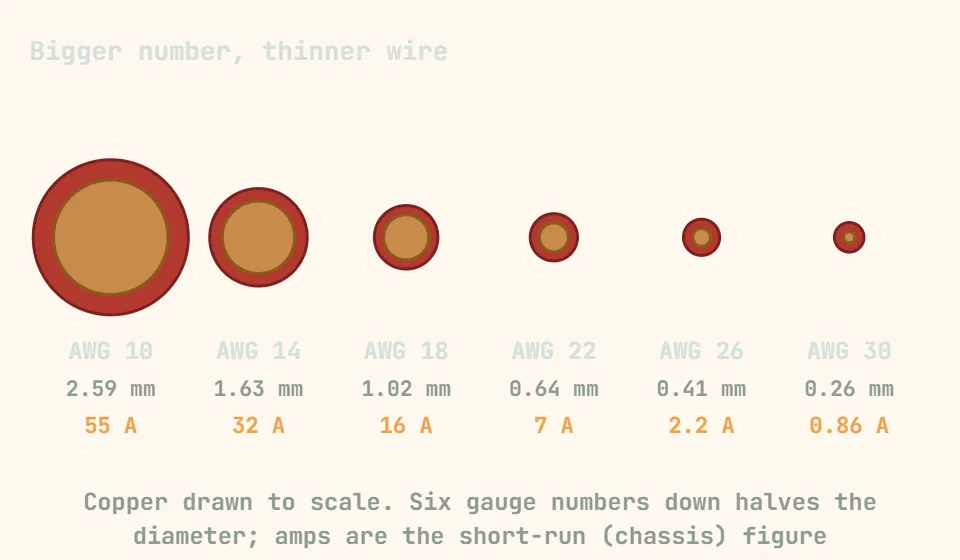
| 1/8 in (≈3.2 mm) | ≈1/16 in (≈1.6 mm) | 18-14 AWG single wire, or 2-3 small wires bundled | 2:1 | ≈90-120°C (194-250°F) |
| 3/16 in (≈4.8 mm) | ≈3/32 in (≈2.4 mm) | 12-10 AWG single wire, small connector-body strain relief, or 2-3 small wires bundled | 2:1 | ≈90-120°C (194-250°F) |
| 1/4 in (≈6.4 mm) | ≈1/8 in (≈3.2 mm) | 10-8 AWG, small battery/motor leads, compact connector bodies | 2:1 | ≈90-120°C (194-250°F) |
| 3/8 in (≈9.5 mm) | ≈3/16 in (≈4.8 mm) | 8-6 AWG, mid-size connector bodies (e.g. XT60-class), small cable bundles | 2:1 | ≈90-120°C (194-250°F) |
| 1/2 in (≈12.7 mm) | ≈1/4 in (≈6.4 mm) | 6-4 AWG, 3-6 wire bundles, battery pack wrap | 2:1 | ≈90-120°C (194-250°F) |
| 3/4-1 in (≈19-25 mm), thin-wall | ≈1/4-1/3 in (≈6-8 mm) | Large harness bundles, motor-lead splices, oddly shaped connector bodies | 3:1 | ≈90-135°C, sustained heat needed for full recovery |
| Dual-wall adhesive-lined (sold across ≈1/8-1 in sizes) | Grips wire OD; inner adhesive melts and flows to fill gaps | Waterproof splices, battery terminals, outdoor/automotive/marine joints | 3:1 typical (up to 4:1) | ≈110-150°C, hold until adhesive visibly oozes from tube ends |
Always test-fit an offcut over the actual wire or connector before committing - insulation thickness varies enough between wire brands and types (PVC vs. silicone vs. PTFE) that the same AWG can need a size up or down. Use a heat gun rather than an open flame or a soldering iron tip near a populated board; uneven or excessive heat can scorch wire insulation or nearby components before the tubing fully recovers.