Reference sheet
Battery types
Chemistries, cell voltages and what each one is good at
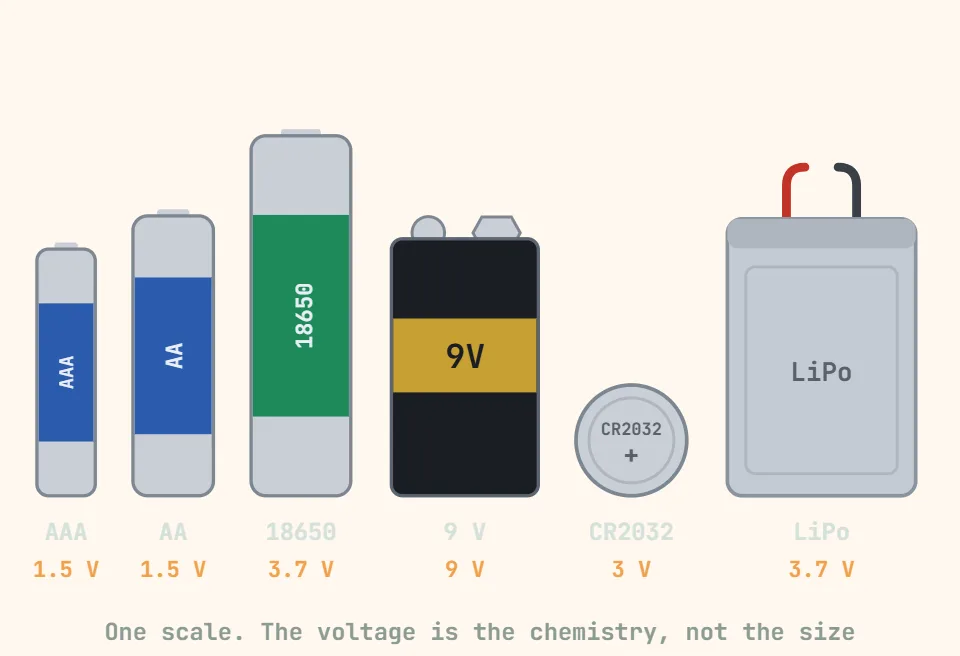
Battery types & voltages
Nominal values — real voltage sags under load and drops as the cell discharges.
| Type | Voltage | Rechargeable | Typical use |
|---|---|---|---|
| AA / AAA alkaline | 1.5 V | No | Remotes, toys, flashlights |
| AA / AAA NiMH | 1.2 V nominal | Yes | Same form factor as alkaline, lower voltage |
| 9V alkaline (PP3) | 9 V | No | Smoke detectors, small instruments |
| CR2032 coin cell | 3 V | No | RTC backup, small remotes, key fobs |
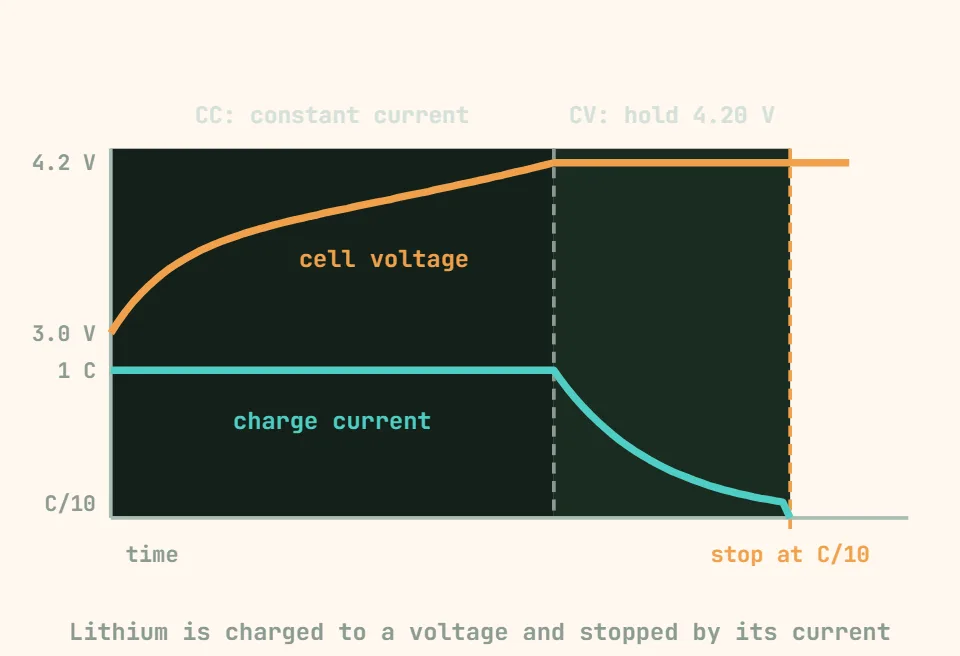
| 18650 Li-ion | 3.7 V nominal (4.2 V full, 3.0 V empty) | Yes | Flashlights, laptop packs, e-bikes |
| LiPo cell | 3.7 V nominal (4.2 V full, 3.0–3.3 V empty) | Yes | Drones, RC models, wearables |
| LiFePO4 cell | 3.2 V nominal (3.65 V full, 2.5 V empty) | Yes | Solar storage, power tools — safer, flatter discharge curve than Li-ion |
| Lead-acid cell | 2.0 V per cell (12 V pack = 6 cells) | Yes | Car batteries, UPS |
| NiCd cell | 1.2 V nominal | Yes | Older cordless power tools |