Electronics quiz
Diodes & LEDs quiz
Forward voltage, polarity, rectification and what makes an LED light up.
18 questions in the app. A few of them, with their answers:
A diode allows current to flow easily in:
- Both directions equally
- Only one direction (forward biased) ✓
- Neither direction
- Only when reverse biased
Answer A diode is a one-way valve for current: it conducts when forward biased and blocks when reversed.
What is the typical forward voltage drop of a standard silicon diode?
- About 0.1 V
- About 0.7 V ✓
- About 5 V
- About 12 V
Answer Silicon diodes typically drop around 0.6-0.7 V when conducting.
What does LED stand for?
- Light Emitting Diode ✓
- Low Energy Device
- Linear Electronic Diode
- Light Enhanced Display
Answer LED = Light Emitting Diode, a diode that emits light when forward biased.
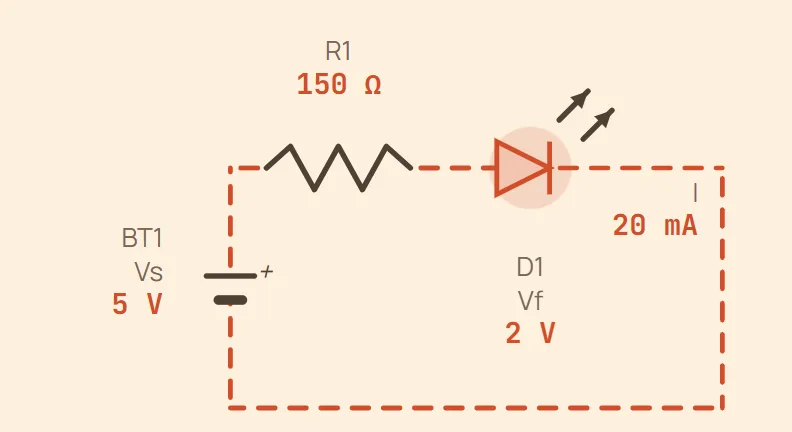
An LED is almost always wired with a series resistor mainly to:
- Increase its brightness beyond its rating
- Limit the current and prevent it from burning out ✓
- Reverse its polarity automatically
- Store extra charge
Answer LEDs have very little resistance of their own; the series resistor sets a safe current.
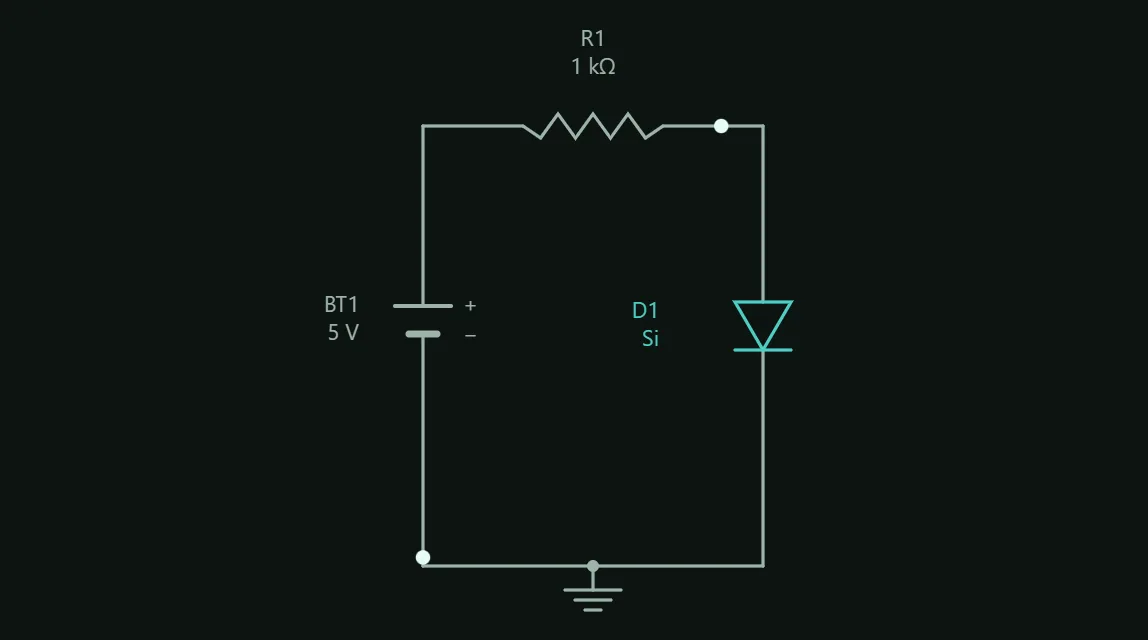
What happens if a standard diode is reverse biased within its rated voltage?
- It conducts fully
- It blocks current, acting like an open circuit ✓
- It doubles the voltage
- It short-circuits
Answer Below its breakdown rating, a reverse-biased diode presents a very high resistance and blocks current.