5 November 2026
Linear vs Switching Regulators: The Trade-Off in One Page
Linear regulators are quiet and simple but waste the extra voltage as heat. Switching regulators are efficient but noisier and more complex. Here is how to choose at the bench.
Why the choice matters on a real bench
Most projects start with a power supply that is a little higher than the chip needs. A 12 V adapter feeds a 5 V microcontroller board, and somewhere in the middle sits a regulator that decides how much of that power actually reaches the circuit and how much becomes heat. The choice between a linear and a switching regulator is really a choice about where the leftover energy goes.
Both types hold an output voltage steady while the input and load change. They differ in how they do it, and that difference shows up in heat, noise, board size, and cost. Knowing the trade-off lets you pick the right part before you find out the hard way that a small package is cooking itself.
How a linear regulator works and what it costs
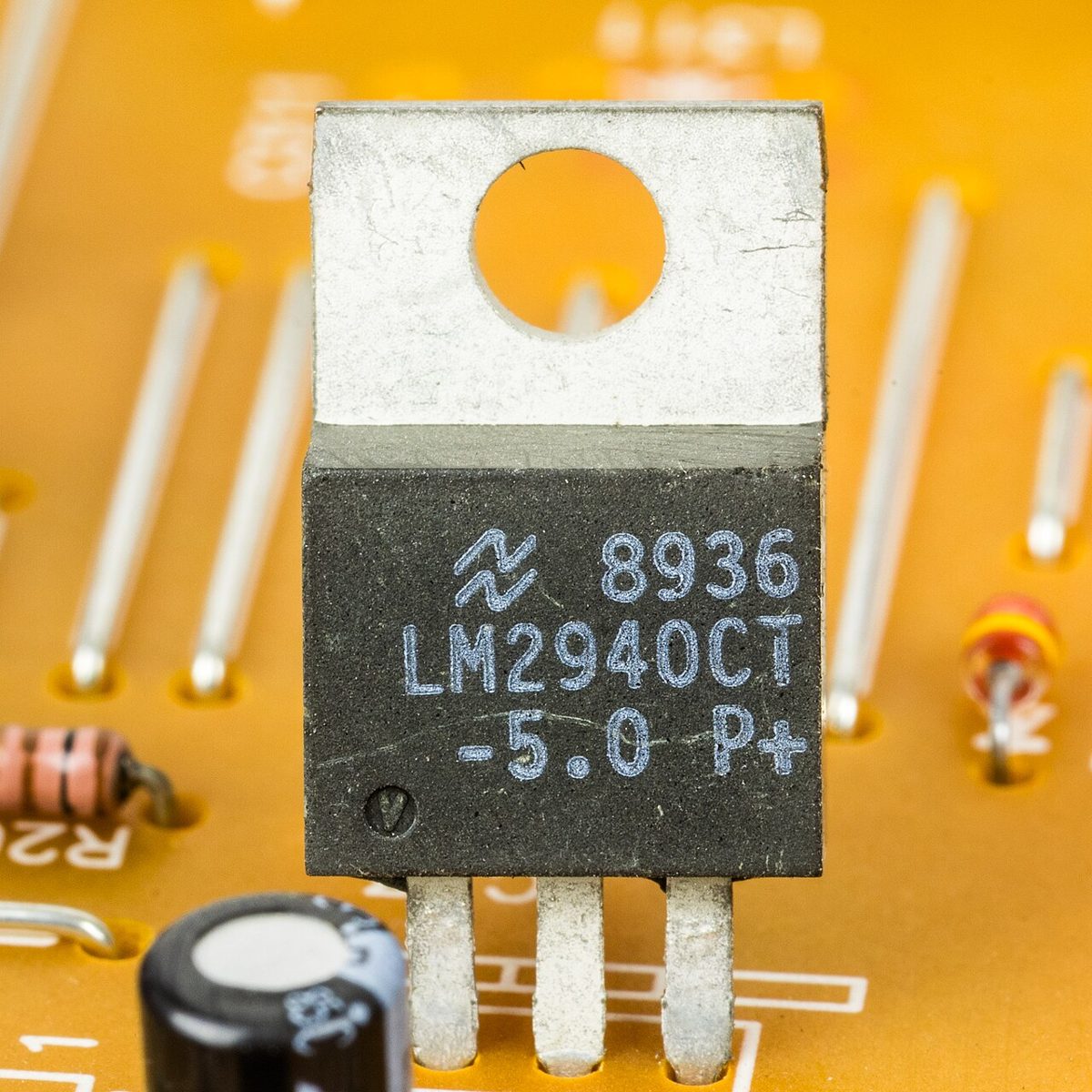
A linear regulator behaves like a variable resistor that is continuously adjusted to hold the output at its set value. Whatever voltage it does not deliver to the load is dropped across the regulator's pass element, and that energy leaves as heat. The power lost is roughly (Vin minus Vout) times the load current, and the efficiency is roughly Vout divided by Vin.
The big advantages are simplicity and quiet output. A typical linear regulator needs only a few capacitors, produces very little switching noise, and has a fast, clean response that suits analog sensors, audio, and RF stages. Its main limit is headroom: most fixed-output types need the input to sit a volt or two above the output (the dropout voltage) before they regulate properly.
Worked example: 12 V to 5 V at 500 mA
Suppose a 5 V logic board draws 0.5 A from a 12 V supply. With a linear regulator, the regulator dissipates (12 V minus 5 V) times 0.5 A, which is 3.5 W. The input supplies 12 V times 0.5 A, which is 6 W, and the load receives 2.5 W. The efficiency is 2.5 divided by 6, about 42 percent, and the other 3.5 W goes to heat.
A TO-220 package with no heatsink often has a junction-to-ambient thermal resistance on the order of tens of degrees Celsius per watt. At 3.5 W, that could push the die well past its rated temperature. A modest heatsink brings the number down but adds size and mounting work. Now assume a buck switching regulator at about 90 percent efficiency. The input power is 2.5 W divided by 0.9, about 2.8 W, so the converter loses only about 0.3 W. Real efficiency varies with load and input voltage, so check the datasheet curve, but the order of magnitude is what matters.
Bench tip Before building the linear version, multiply the drop by the load current. If the answer is more than a watt or two, plan for a heatsink or switch to a switching regulator.
What switching regulators trade away
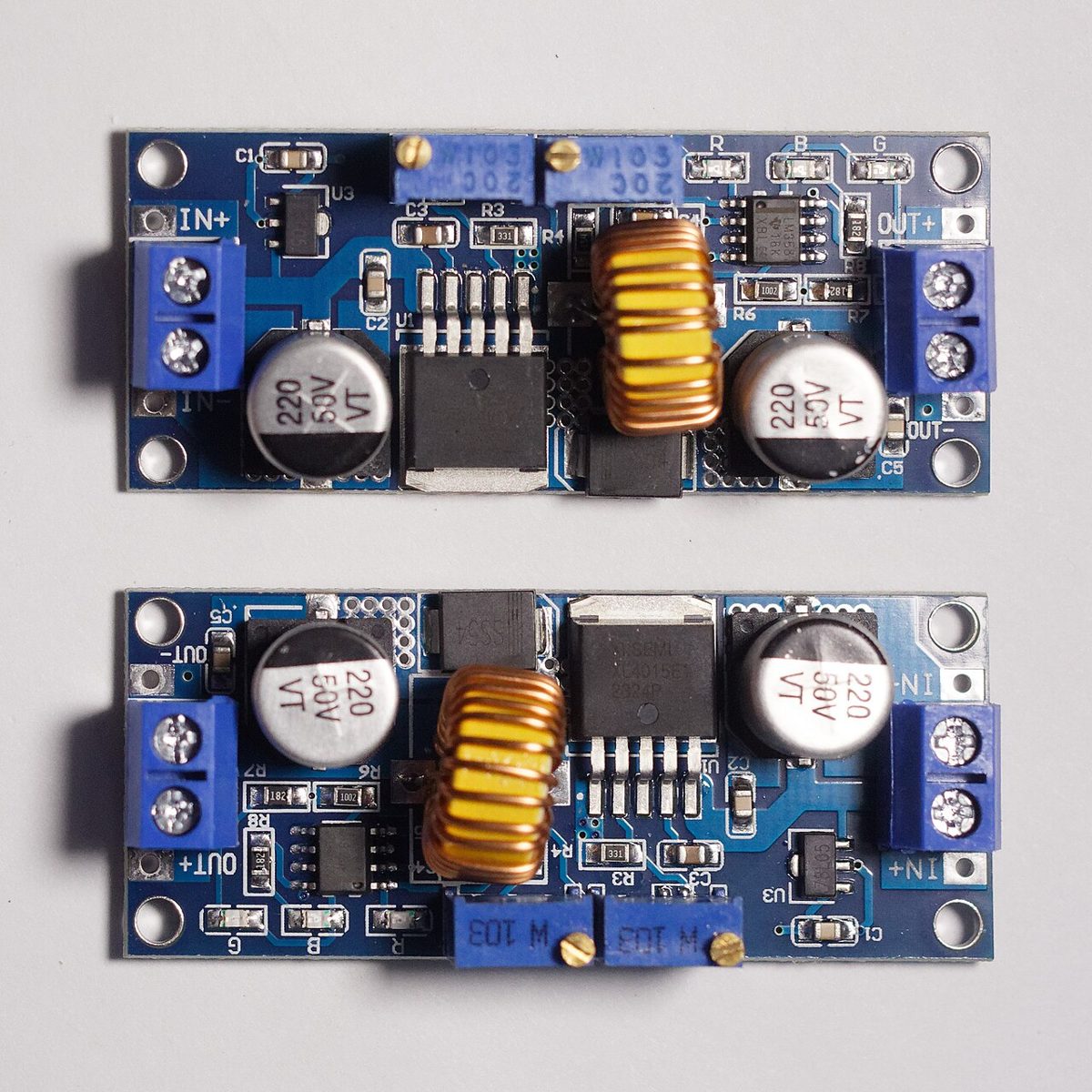
A switching regulator rapidly turns a switch on and off and uses an inductor and capacitor to smooth the energy into a steady output. Because the switch is either fully on or fully off, little power is lost in the switch itself. The result is high efficiency over a wide input range, small inductors and capacitors at high switching frequencies, and the ability to step voltage up, down, or invert it.
The cost is noise and complexity. The switching edges create ripple on the output and radiated or conducted noise that can disturb sensitive analog circuits. Layout matters: the input capacitor, switch, and diode loop should be kept tight, and the inductor should not sit next to a high-impedance node. Many designs add a linear post-filter or a second LC stage when the load is noise-sensitive.
Bench tip If a switching module's output looks noisy on the scope, first check the probe ground lead length and the loop area of the power path before blaming the regulator.
Choosing at the bench
Use a linear regulator when the voltage drop is small, the current is low, or the circuit is an analog stage that needs very quiet power. It is also the sensible choice when you need only a few milliamps and want the fewest possible parts. Use a switching regulator when the drop is large, the current is significant, the supply runs from a battery, or heat is a real constraint.
A common practical compromise is a switching regulator followed by a linear regulator. The switcher takes the big voltage drop efficiently, and the linear stage cleans up its ripple for the sensitive load. Whichever you choose, check the dropout, quiescent current, maximum input voltage, and thermal resistance on the datasheet, and measure the actual output ripple with a scope before you trust the design.
Bench tip Measure the regulator's input and output currents and voltages with your multimeter at full load. The numbers often reveal inefficiency that a quick calculation missed.