पिनआउट
SMA कनेक्टर पिनआउट
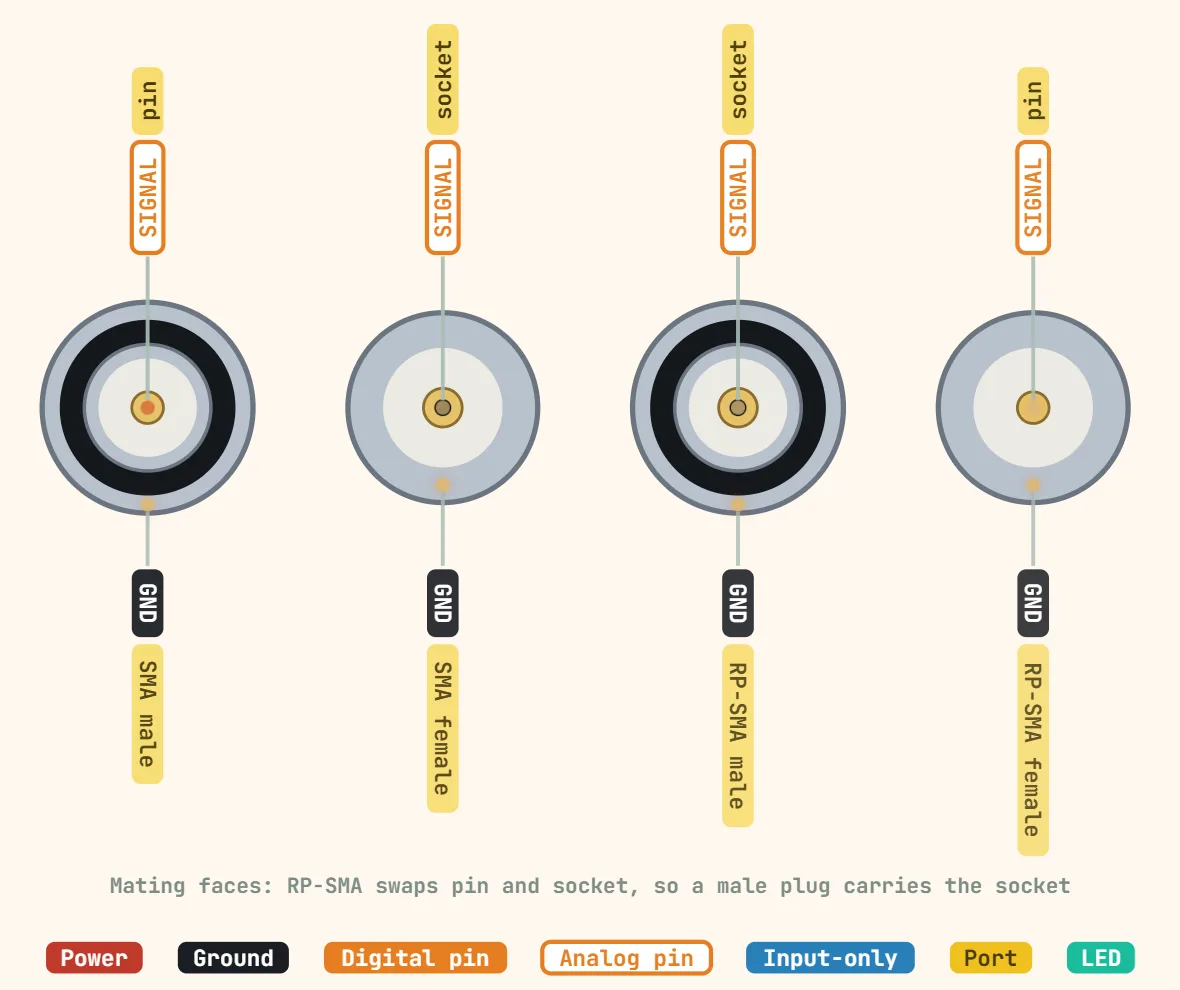
पिन
- Center conductor (signal) — carries the RF signal; the connector's 50Ω characteristic impedance is set by the ratio between this center conductor's diameter and the shell's inner bore, not by any single part on its own.
- Outer shell / coupling body (ground/shield) — the RF return path, not just a mechanical shroud; a loose or cross-threaded coupling raises return loss and shows up as signal loss well before the joint feels mechanically wrong.
- SMA Male (plug) — a free-spinning coupling nut with internal threads that screws onto the mating jack's externally-threaded post, with a pin (protruding center conductor) at its center; this is what's on most antenna pigtail cables.
- SMA Female (jack) — a fixed, externally-threaded post (commonly panel- or PCB-mounted) with a recessed socket at its center to receive the plug's pin; common on bulkhead connectors in radios (e.g. Yaesu/Icom/Kenwood handhelds) and test gear (VNAs, spectrum analyzers) — most consumer WiFi routers use the reverse-polarity version instead (RP-SMA Female, below), not this standard SMA Female.
- RP-SMA Male — the same internally-threaded coupling-nut shell as a standard SMA male plug, but with a SOCKET at its center instead of a pin — the reverse of what "male" means on standard SMA; found on most WiFi/LoRa antenna pigtails.
- RP-SMA Female — the same externally-threaded post shell as a standard SMA female jack, but with a PIN at its center instead of a socket; found on most WiFi/LoRa/cellular bulkhead jacks on dev boards (ESP32, Heltec, TTGO and similar), and on most consumer WiFi routers.
विनिर्देश
| इम्पीडेंस | 50 Ω |
|---|---|
| फ़्रीक्वेंसी रेंज | DC–18 GHz |
| थ्रेड | 1/4"-36 UNS |
| कपलिंग टॉर्क | 0.8–1.1 N·m (7–10 in·lb), स्टेनलेस |
| जोड़ने के चक्र | 500 |
| वेरिएंट | SMA और RP-SMA (पिन और सॉकेट बदले हुए) |
| सामान्य केबल | RG-316, RG-174, सेमी-रिजिड |
| सामान्य उपयोग | Wi-Fi / LoRa एंटेना, रेडियो, RF टेस्ट उपकरण |
नोट्स
- RP-SMA और स्टैंडर्ड SMA बिल्कुल एक जैसे कसते हैं (मेल शेल का नट फ़ीमेल शेल के पोस्ट पर दोनों तरह कसता है) लेकिन विद्युत रूप से आपस में बदले नहीं जा सकते: RP-SMA Male के बीच में पिन के बजाय सॉकेट होता है, इसलिए दोनों फ़ैमिली के बीच मेल-से-मेल या फ़ीमेल-से-फ़ीमेल सेंटर-कॉन्टैक्ट मेल न खाने पर पार्ट ठीक से कस जाने के बावजूद कोई विद्युत कनेक्शन नहीं बनता — पिगटेल या एडैप्टर ऑर्डर करने से पहले हमेशा असली सेंटर कॉन्टैक्ट जाँचें, सिर्फ़ मेल/फ़ीमेल लेबल नहीं।
- रिवर्स-पोलैरिटी स्कीम बिना लाइसेंस वाले कंज़्यूमर ट्रांसमीटर के लिए अक्सर बताए जाने वाले FCC नियम (47 CFR 15.203) से आती है: गैर-स्टैंडर्ड एंटीना कनेक्टर की शर्त डिवाइस को दोबारा सर्टिफ़ाई किए बिना ज़्यादा गेन वाला एंटीना लगाने से रोकती है। कंज़्यूमर WiFi उपकरण पर इस नियम को पूरा करने के लिए RP-SMA व्यावहारिक कनेक्टर बन गया, और LoRa मॉड्यूल ने इसे वहीं से अपनाया।
- BNC या N-type की तुलना में SMA की चूड़ियाँ काफ़ी बारीक और नाज़ुक हैं — हाथ से कसकर फिर रिंच से लगभग आठवाँ से चौथाई घुमाव सामान्य सलाह है; प्लायर से ज़ोर से कसना हॉबी एंटीना पिगटेल पर कपलिंग नट घिसने या कनेक्टर का डाइइलेक्ट्रिक फाड़ने का आम तरीका है।
- WiFi, LoRa और सामान्य RF काम में इस्तेमाल होने वाले स्टैंडर्ड 50Ω के साथ-साथ दिखने में लगभग एक जैसा 75Ω SMA वेरिएंट भी है (ज़्यादातर पुराने टेस्ट और वीडियो उपकरण) — दोनों बिना किसी मैकेनिकल चेतावनी के कस जाते हैं, इसलिए इम्पीडेंस मिसमैच सिर्फ़ खराब return loss/VSWR के रूप में दिखता है, फ़िट होने की समस्या के रूप में कभी नहीं।
- ज़्यादातर ESP32/LoRa डेव बोर्ड पर बाहरी RP-SMA बल्कहेड जैक सीधे PCB ट्रेस से नहीं, बल्कि एनक्लोज़र के अंदर छोटे U.FL/IPEX पिगटेल से रेडियो तक पहुँचता है — ठीक से न बैठा U.FL कनेक्टर मृत एंटीना पोर्ट का आम कारण है जिसका SMA कनेक्टर से कोई लेना-देना नहीं।