पिनआउट
स्क्रू टर्मिनल ब्लॉक (2/3/5.08mm पिच) पिनआउट
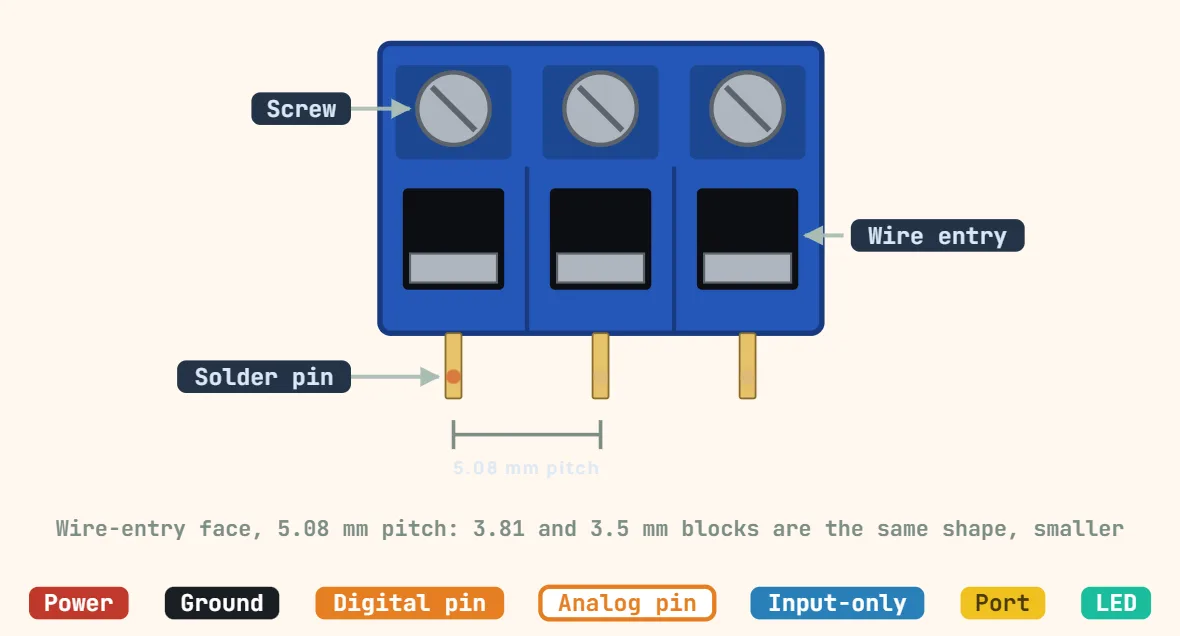
पिन
- 2.54mm (0.1") pitch — the smallest common screw-terminal spacing; typically rated around 6A (UL) / 8A (IEC) at 130–150V and accepts about 18–26 AWG wire, so it's used for low-to-moderate-current signal and small-load wiring rather than mains-level power
- 3.5mm / 3.81mm pitch — the size on most Arduino shields, stepper/motor-driver breakouts (A4988, DRV8825, TB6600) and small power modules; typically rated 8–10A at up to 250–300V and accepts about 16–28 AWG wire (0.08–1.5mm²)
- 5.0mm / 5.08mm (0.2") pitch — the largest and most current-capable of the three; typically rated 10–15A at up to 300–320V and accepts about 12–24 AWG wire (0.2–2.5mm²) — the usual pick for PSU output, relay, and motor power wiring
- Screw — a captive slotted or Phillips screw drives a metal clamp plate straight down onto the bare conductor; it never needs to come fully out, only backed off far enough for the stripped wire to slide under the plate
- Wire entry — the chamfered hole on the wire-facing side, sized to that pitch's rated gauge range; strip length is rarely printed on the part itself but is commonly around 5–7mm
- Pluggable plug + header — many 3.5mm and 5.08mm blocks split into a header soldered to the board and a matching plug that unplugs for off-board wiring; a non-pluggable ("fixed") block instead has the wire land directly in a housing that is itself soldered down
विनिर्देश
| आम पिच | 2.54, 3.5, 3.81, 5.0, 5.08 mm |
|---|---|
| 2.54 mm (सामान्य) | 6–8 A, 130–150 V, 18–26 AWG |
| 3.5 / 3.81 mm (सामान्य) | 8–10 A, 250–300 V, 16–28 AWG |
| 5.0 / 5.08 mm (सामान्य) | 10–15 A, 300–320 V, 12–24 AWG |
| छीलने की लंबाई | ≈ 5–7 mm |
| स्क्रू टॉर्क | ≈ 0.2–0.5 N·m |
| वेरिएंट | फ़िक्स्ड या प्लग होने वाला (प्लग + हेडर) |
| नोट | रेटिंग नए, खुली हवा के आँकड़े हैं; कम करके लें |
नोट्स
- 3.5mm और 3.81mm पिच वाले ब्लॉक लगभग एक जैसे दिखते हैं लेकिन आपस में बदले नहीं जा सकते — एक पिच के लिए बना ब्लॉक दूसरी के लिए बने PCB फ़ुटप्रिंट पर ठीक से नहीं बैठेगा, यह सस्ते आयातित बोर्ड पर आम गड़बड़ी है जिनकी सिल्कस्क्रीन नहीं बताती कि कौन-सी इस्तेमाल हुई।
- स्क्रू सिर्फ़ खुले कंडक्टर को कसता है; इंसुलेशन को कोई स्ट्रेन रिलीफ़ नहीं देता, इसलिए जो केबल ठीक ब्लॉक पर मुड़ती या खिंचती है, वह स्क्रू पूरा कसा होने पर भी आखिरकार किसी तार को ढीला कर देगी या तोड़ देगी — हिलने या कंपन वाली किसी भी चीज़ पर केबल को ब्लॉक के पास बाँधें या क्लिप करें।
- ज़्यादा कसने से छोटे स्क्रू की चूड़ियाँ घिस जाती हैं या ब्लॉक का प्लास्टिक हाउसिंग फट जाता है, जबकि कम कसने से ऐसा कनेक्शन बचता है जो लोड पर गर्म होता है और स्पार्क करता है; निर्माता डेटाशीट इन छोटे ब्लॉक साइज़ के लिए आमतौर पर लगभग 0.2–0.5 N·m सुझाती हैं, भले ही यह आँकड़ा पार्ट पर शायद ही छपा हो, इसलिए अच्छे से कसकर फिर एक मज़बूत खिंचाव ही व्यावहारिक जाँच है।
- छपी करंट/वोल्टेज रेटिंग नए कनेक्टर और खुली हवा का आँकड़ा है — अगल-बगल लगे टर्मिनल, पास के कंपोनेंट की गर्मी, और समय के साथ क्लैंप का धीरे-धीरे ढीला होना, सब सुरक्षित लगातार करंट घटाते हैं, इसलिए डेटाशीट के आँकड़े को लगातार चलाने का लक्ष्य नहीं, बल्कि ऐसी सीमा मानें जिससे काफ़ी नीचे रहना है।