पिनआउट
DHT11 / DHT22 तापमान और आर्द्रता सेंसर (4-पिन) पिनआउट
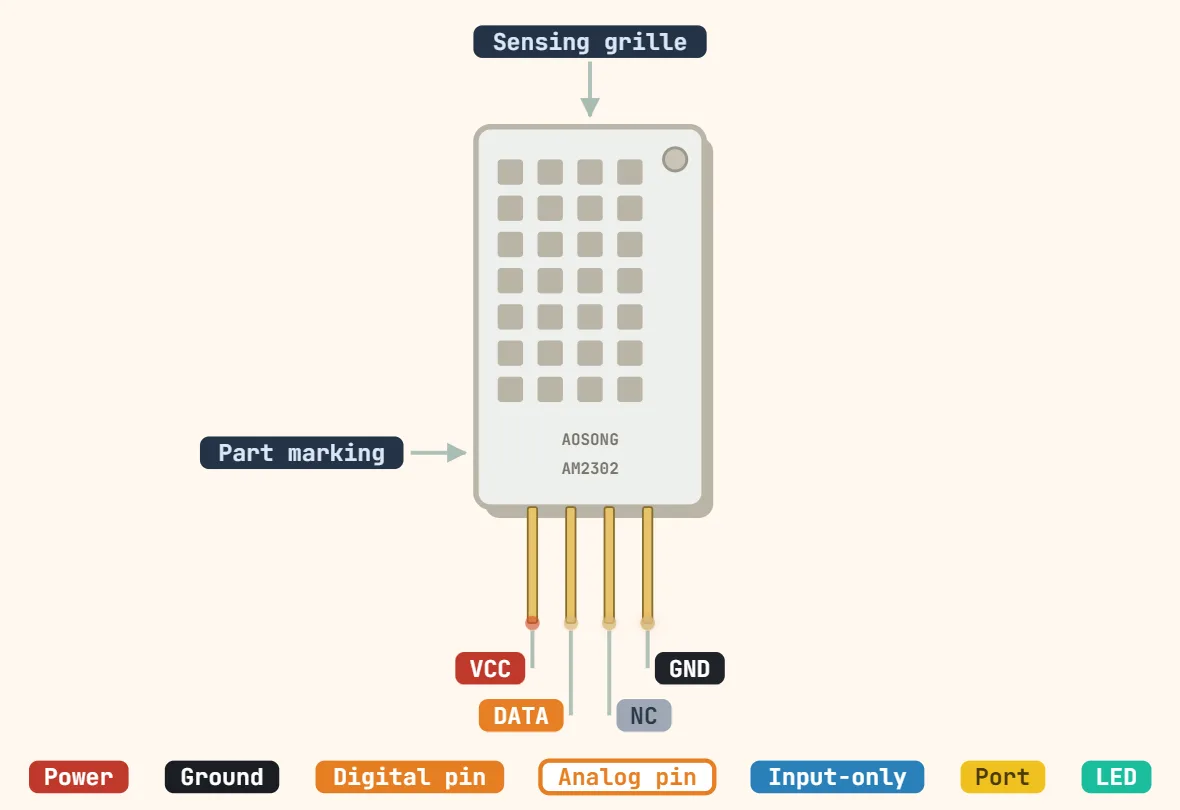
पिन
- VCC (3.3–5.5V — DHT11 modules commonly run at 5V; the DHT22/AM2302 works fine down to 3.3V)
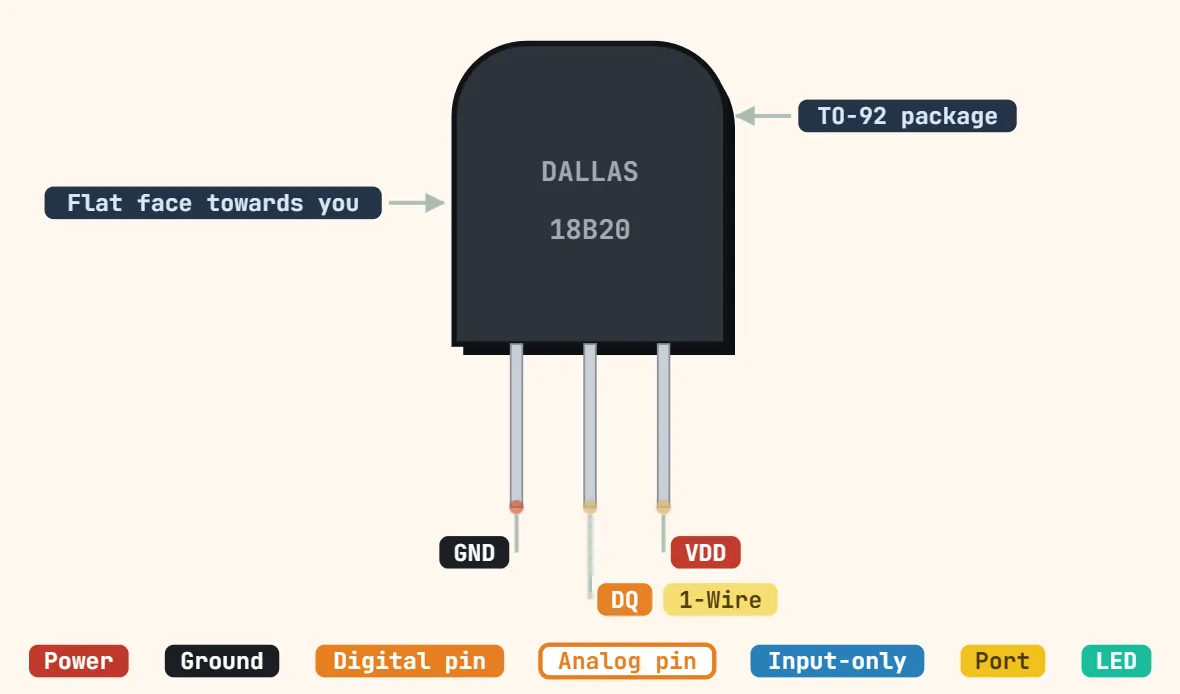
- DATA — a single-wire digital signal (its own protocol, not the DS18B20's 1-Wire despite the similar look). Needs a 4.7–10kΩ pull-up resistor to VCC — without one every read comes back NaN, silently, forever
- NC — not connected, on the bare 4-pin sensor
- GND
विनिर्देश
| सप्लाई वोल्टेज | DHT11: 3–5.5 V; DHT22: 3.3–6 V |
|---|---|
| इंटरफ़ेस | Single-wire digital (proprietary, not 1-Wire) |
| Pull-up on DATA | 4.7–10 kΩ to VCC |
| Temperature range | DHT11: 0–50 °C; DHT22: −40–80 °C |
| Temperature accuracy | DHT11: ±2 °C; DHT22: ±0.5 °C |
| Humidity range | DHT11: 20–90 %RH; DHT22: 0–100 %RH |
| Humidity accuracy | DHT11: ±5 %RH; DHT22: ±2 %RH (±5 %RH max) |
| Resolution | DHT11: 1 °C / 1 %RH; DHT22: 0.1 °C / 0.1 %RH |
| Sampling rate | DHT11: 1 Hz max; DHT22: 0.5 Hz max (one read every 2 s) |
| Supply current (measuring) | DHT11: 0.5–2.5 mA; DHT22: 1–1.5 mA |
नोट्स
- The common 3-pin breakout board already carries the pull-up resistor (and usually a decoupling capacitor), but does not necessarily keep this same pin order — check the board's own silkscreen rather than assuming VCC/DATA/GND left-to-right.
- Minimum interval between reads: 1s for the DHT11, 2s for the DHT22/AM2302 — reading faster returns stale or invalid data.
- The DHT11 and DHT22 share this pinout, but not the body: the DHT11 is the smaller blue one, the DHT22 (AM2302) the larger white one. The DHT22 is meaningfully more accurate (±0.5°C / ±2–5%RH vs. the DHT11's ±2°C / ±5%RH).