मुफ़्त ऑनलाइन कैलकुलेटर
स्ल्यू रेट और बैंडविड्थ कैलकुलेटर
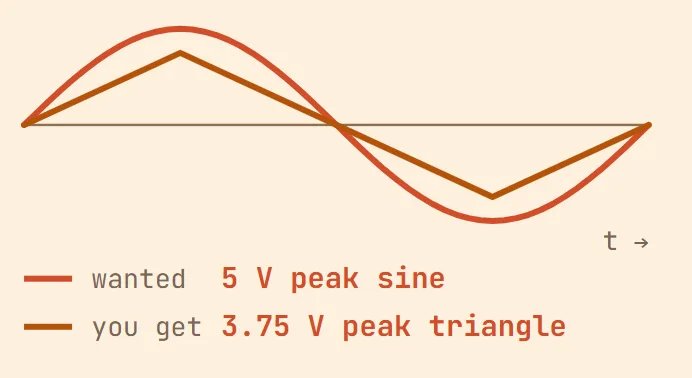
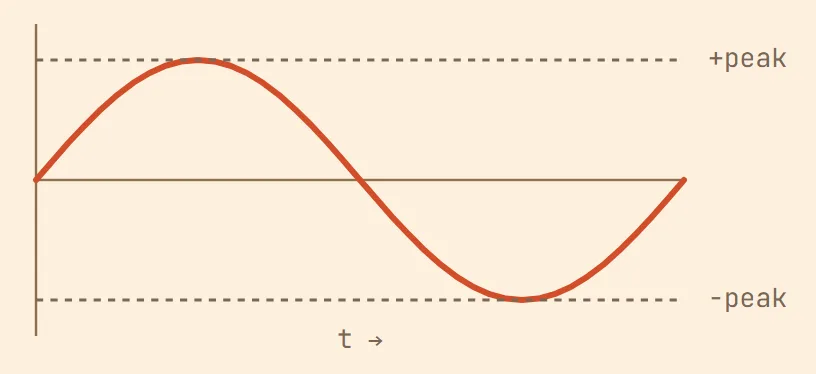
उदाहरण Slew limit 9.549 kHz · GBW limit 100 kHz — the slew rate bites first, at 9.549 kHz. At 20 kHz the output slews and never reaches 5 V peak: it tops out at 3.75 V as a triangle, and the biggest clean sine is 2.387 V peak (4.775 V pk-pk).
Full-power bandwidth: — the highest frequency at which the op-amp can still swing the whole amplitude. Past it the output stops following and simply ramps at its slew rate, so a sine comes out as a triangle; the biggest clean peak left is .
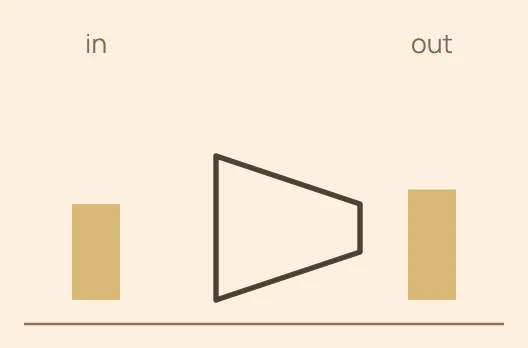
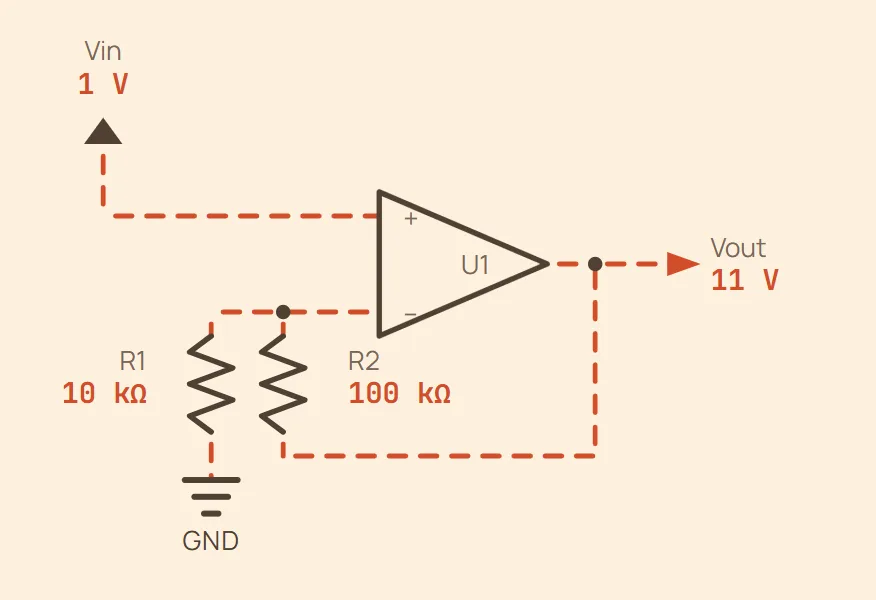
The other ceiling is small-signal roll-off: . The mistake is checking only that one. An LM358 at ×10 has 100 kHz of closed-loop bandwidth, which looks like plenty for a 20 kHz signal — but at 5 V peak its 0.3 V/µs slew rate has already given up at 9.5 kHz.
The slew rate is what binds here: the gain-bandwidth product alone would have allowed 100 kHz, but an output swinging 5 V peak cannot be pushed past 9.549 kHz. That is the trap — the GBW figure looks generous and the output still comes out as a triangle. At 20 kHz this output slews instead of following: expect straight flanks, not a sine, and harmonics a DC test will never show. Halving the amplitude doubles the full-power bandwidth, which is usually cheaper than a faster op-amp; splitting the gain over two stages fixes the other limit.
आप क्या दर्ज करते हैं
- स्लू रेट
- Output amplitude, peak (V)
- Signal frequency (Hz)
- Gain-bandwidth product (Hz)
- Closed-loop gain (×)
- Using a common part? Pick it (fills in the slew rate and the GBW):