मुफ़्त ऑनलाइन कैलकुलेटर
करंट-सेंस शंट कैलकुलेटर
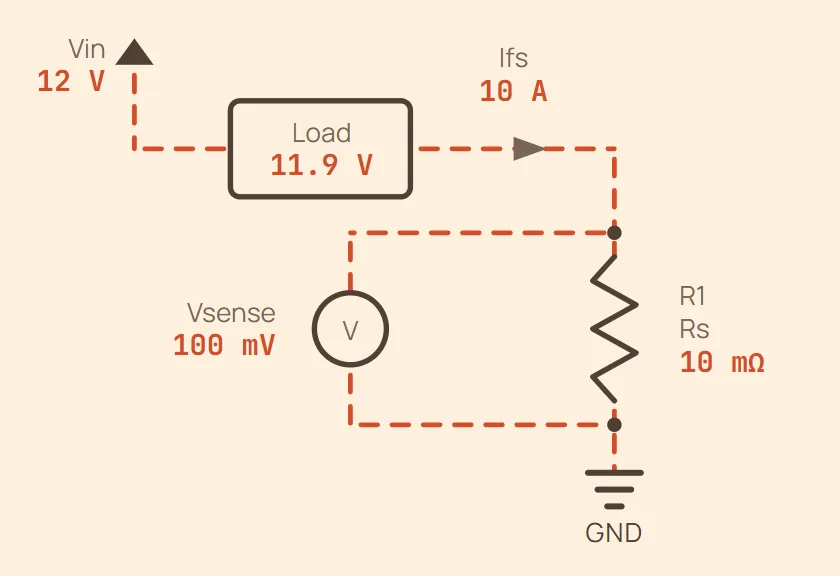
उदाहरण R = 10 mΩ → nearest E24 10 mΩ, which gives 100 mV at 10 A — that is the burden voltage your load no longer gets (0.83 % of a 12 V rail) — and 1 W of heat
उदाहरण A 2512 chip at ~40 °C/W runs 40 °C above ambient (65 °C), which is 100 % of the 1 W it is still rated for at 25 °C — past the 60 % anyone should design to, so go one package larger or accept a smaller sense voltage. At 100 ppm/°C that rise alone shifts the reading by 0.4 %, so sense the two terminals directly (Kelvin) and keep the copper around it cool
सूत्र
डिफ़ॉल्ट मानों के साथ
— but the sense voltage is the real decision, because it alone fixes the heat: , with R cancelling out. 100 mV at 10 A is a full watt no matter which resistor you buy.
The mistake is choosing a generous sense voltage for a clean signal and then putting it in a package that cannot get rid of the power: , and a shunt that runs hot changes value while you are reading it. A package's watts are quoted at 70 °C and fall to nothing at its maximum operating temperature, so the ambient you give below decides how much of that rating is actually left. Driving an amplifier instead? is the sense voltage its gain implies at the top of the ADC's range — a ceiling, not a target, so the shunt is rounded DOWN to a stocked value in that mode.
आप क्या दर्ज करते हैं
- Full-scale current (A)
- Set the shunt from
- Sense voltage at full scale (V)
- Amplifier gain (×)
- ADC full scale (V)
- Supply rail (V)
- पैकेज
- Ambient temperature (°C)